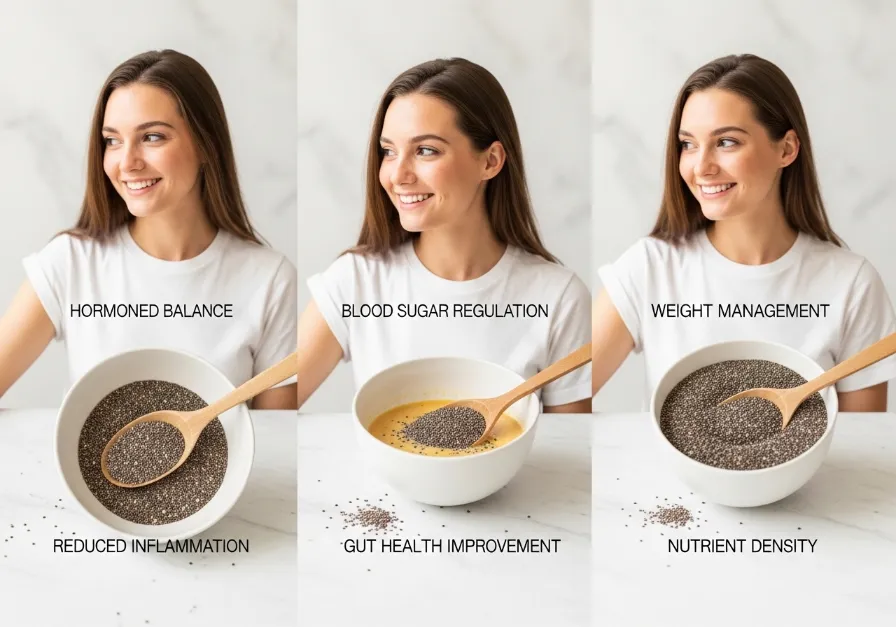
Chia Seeds for Period Pain and PMS Relief: The Complete Evidence-Based Guide (2026)
She cancelled plans for the third month in a row.
Day one. Flat in bed. Heating pad on her lower abdomen. Ibuprofen is doing half a job. She was 27, healthy by every clinical measure, and completely exhausted by how predictable the pain had become.
Three months later, she had not used a single painkiller during her period. No new medication. No procedure. Consistent daily nutrition — anchored by two tablespoons of chia seeds — built over eight weeks.
This guide explains exactly why that works: the mechanisms, the research, the honest limitations, and a precise protocol you can start today.
Why Period Pain Is an Inflammatory Problem — Not Just a “Sensitivity”
Primary dysmenorrhea — the medical term for painful periods without an underlying condition like endometriosis — affects an estimated 50 to 90% of women of reproductive age, making it one of the most prevalent gynecological complaints worldwide.
The root driver is prostaglandin overproduction.
As the uterine lining sheds each cycle, it releases prostaglandins — inflammatory compounds that trigger uterine muscle contractions to expel the lining. In women with severe cramping, the uterus produces significantly more of these compounds, causing intense contractions that restrict blood flow and generate ischemic pain radiating into the lower back and thighs.
Women with dysmenorrhea produce 8 to 13 times more pain-causing prostaglandins (specifically PGF2-alpha and PGE2) than women without it.
This is measurable inflammatory biology. And that is why nutrition intervenes — anti-inflammatory dietary patterns directly modulate prostaglandin synthesis.
Here is the insight most articles miss: food does not work in the 48 hours before your period. It works across your entire cycle, accumulating in cell membranes over 6 to 8 weeks. You cannot eat your way out of cramps on day 28. You build the foundation all month.
What Chia Seeds Contain That Directly Targets Your Cycle
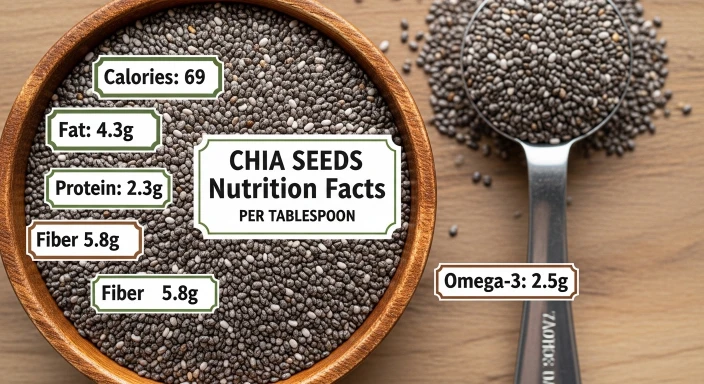
Two tablespoons (28g) of chia seeds provide a nutrient stack that maps precisely onto the biological drivers of period pain and PMS.
| Nutrient | Per 28g | Why It Matters for Your Cycle |
|---|---|---|
| Omega-3 ALA | 5.1g | Competes with inflammatory omega-6s; reduces prostaglandin severity |
| Magnesium | 95mg (23% DV) | Relaxes uterine smooth muscle; inhibits prostaglandin synthesis; supports serotonin |
| Fiber | 10–11g | Reduces bloating; supports estrogen clearance through the gut |
| Calcium | 179mg (18% DV) | Works synergistically with magnesium for muscle function |
| Iron | 2.2mg (12% DV) | Replenishes iron lost during menstruation |
| Zinc | 1.3mg (12% DV) | Directly reduces menstrual cramp intensity |
| Quercetin | Present | Inhibits NF-kB inflammatory pathway |
| Chlorogenic acid | Present | Antioxidant; reduces systemic oxidative stress throughout the cycle |
No single whole food covers this range of cycle-relevant nutrients simultaneously. That is the actual reason chia seeds work — not mystique, but nutrient density at the exact intersections that matter for menstrual health.
For the full nutritional breakdown, explore the chia seeds benefits for women guide on Seeds Benefits.
The Prostaglandin–Omega-3 Mechanism (What Most Articles Skip)
Your body synthesises prostaglandins from fatty acids in your cell membranes. The type of fatty acid present determines whether the resulting prostaglandin is inflammatory or anti-inflammatory.
Omega-6 fatty acids (dominant in processed seed oils, refined foods, red meat) generate pro-inflammatory prostaglandins — the type that intensifies uterine contractions and cramp severity.
Omega-3 fatty acids (abundant in chia seeds, fatty fish, walnuts) generate anti-inflammatory prostaglandins — the type that moderates contractions and reduces pain signalling.
The omega-6 to omega-3 ratio in the typical Western diet is roughly 15:1 to 20:1. The ideal ratio for reducing inflammatory disease is closer to 4:1. That gap explains why so many women with standard diets experience severe period pain.
Adding chia seeds daily — consistent omega-3 intake — gradually shifts this membrane ratio. The body rebuilds cell membrane composition over approximately 6 to 8 weeks, which is why researchers and practitioners consistently report that chia seed benefits for menstrual pain emerge after two full cycles, not one.
The honest limitation: Chia seeds contain ALA, a plant-based omega-3. The body converts ALA into EPA and DHA (the most active anti-inflammatory forms) at roughly 5 to 10% efficiency for EPA and less than 1% for DHA. Women convert ALA at approximately 2.5 times the rate of men — a genuine biological advantage. But for maximum prostaglandin reduction, combining chia seeds with algal oil supplements (a vegan DHA source) is more effective than relying on ALA conversion alone.
This nuance is missing from nearly every competitor article. Understanding it lets you build a smarter protocol.
Magnesium: The Most Underrated Mineral for Your Period
Magnesium may be more important for period pain than omega-3s — and far fewer women know they are likely deficient in it.
A double-blind clinical trial of 126 women found that 250mg of magnesium significantly relieved PMS symptoms including muscle pain, back pain, headaches, depression, water retention, and anxiety. A separate review found that women who experience more intense PMS symptoms are significantly more likely to be deficient in magnesium.
Magnesium works through three distinct pathways for period pain:
1. Uterine muscle relaxation. Magnesium is essential for smooth muscle function. Low magnesium allows the uterine muscle to contract more forcefully and persistently. Adequate magnesium directly reduces contraction intensity.
2. Prostaglandin inhibition. Magnesium suppresses the synthesis of PGF2-alpha and PGE2 — the same pain-causing prostaglandins that drive cramping. This is a direct mechanism, not a secondary benefit.
3. Vasodilation. By relaxing blood vessel walls, magnesium improves circulation to the uterus, reducing the ischemia (oxygen restriction) that intensifies pain during contractions.
Beyond cramps, magnesium supports serotonin production and cortisol regulation — the two neurotransmitters most involved in PMS mood symptoms. The irritability, anxiety, and tearfulness of the luteal phase are partly driven by magnesium-dependent serotonin fluctuations.
Two tablespoons of chia seeds provide 95mg of magnesium. The recommended daily intake for adult women is 310 to 320mg. Chia seeds cover roughly 30% of that in a single serving, making them one of the most efficient food-based magnesium sources available.
To understand how chia seeds support the broader hormonal picture — including estrogen and progesterone balance — read chia seeds for hormonal balance on Seeds Benefits.
How Chia Seeds Address Each PMS Symptom Specifically
Menstrual Cramps (Dysmenorrhea)
Omega-3 ALA shifts the membrane fatty acid ratio, reducing the severity of prostaglandin-driven contractions. Magnesium directly relaxes the uterine smooth muscle and inhibits prostaglandin synthesis. These two mechanisms work in parallel, not redundantly.
Timeline: Expect reduced cramp intensity after two complete cycles of daily chia seed consumption (6 to 8 weeks).
Bloating and Digestive Discomfort
PMS bloating has two causes: water retention driven by hormonal fluctuations, and gut sluggishness caused by progesterone’s relaxing effect on smooth muscle. Chia seeds address the second cause directly.
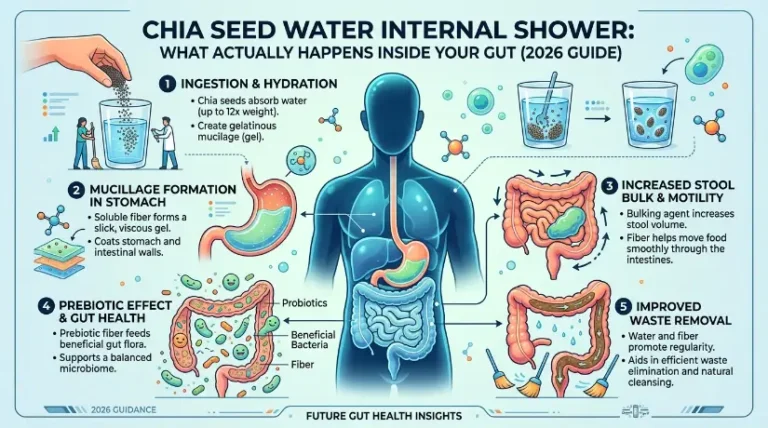
The soluble fiber in chia seeds forms a gel in the digestive tract, supporting motility and reducing the constipation and bloating that progesterone causes in the luteal phase. Critical note: This only works with adequate hydration. Chia seeds without sufficient fluid can worsen digestive discomfort. Always consume with at least 250ml of water.
Fiber also supports estrogen clearance through the gut. When fiber is low, reabsorption of processed estrogen in the colon rises — contributing to estrogen dominance symptoms including bloating, breast tenderness, and mood instability. For a deeper look at this pathway, see chia seeds for hormonal balance and estrogen on Seeds Benefits.
Mood Swings, Anxiety, and Irritability
The luteal phase brings a sharp post-ovulation drop in progesterone and estrogen, destabilising serotonin and GABA levels. Magnesium supports both serotonin production and the regulation of cortisol (your primary stress hormone).
Chronic stress depletes magnesium. Low magnesium worsens cortisol response. Elevated cortisol further depletes progesterone, compounding PMS mood symptoms. Consistent magnesium intake from chia seeds breaks this cycle over time.
PMS Headaches and Menstrual Migraines
A 2002 study evaluating 270 women at a headache clinic found a strong association between magnesium deficiency and menstrual migraine onset. Subsequent research confirmed that women who supplemented magnesium in the weeks before menstruation experienced fewer headaches during their period.
Two tablespoons of chia seeds daily contributes meaningfully to magnesium status without supplements or additional cost.
Fatigue and Low Energy
Iron loss during menstruation is significant, particularly in women with heavy periods. Chia seeds provide 2.2mg of non-heme iron per serving. Pair with vitamin C-rich foods (citrus, bell peppers, berries) at the same meal to enhance non-heme iron absorption by up to 300%.
Zinc, also present in chia seeds, supports immune function during menstruation and has been independently studied for reducing cramp severity. Research has found that even small doses of zinc can significantly ease menstrual cramps.
Sleep Disruption
Shifting hormones in the luteal phase and early menstruation commonly cause insomnia or reduced sleep quality. Magnesium promotes melatonin production and activates the parasympathetic nervous system — the “rest and digest” mode that opposes cortisol-driven alertness. Consistent magnesium intake over several weeks measurably improves sleep latency and sleep quality.
The Inflammation–PMS Feedback Loop (And Why It Gets Worse Without Intervention)
Here is a pattern that almost nobody discusses.
Systemic inflammation — driven by diet, stress, sleep deficit, and gut imbalance — amplifies PMS symptoms. PMS symptoms (poor sleep, pain, stress) elevate cortisol. Elevated cortisol increases systemic inflammation. The cycle compounds.

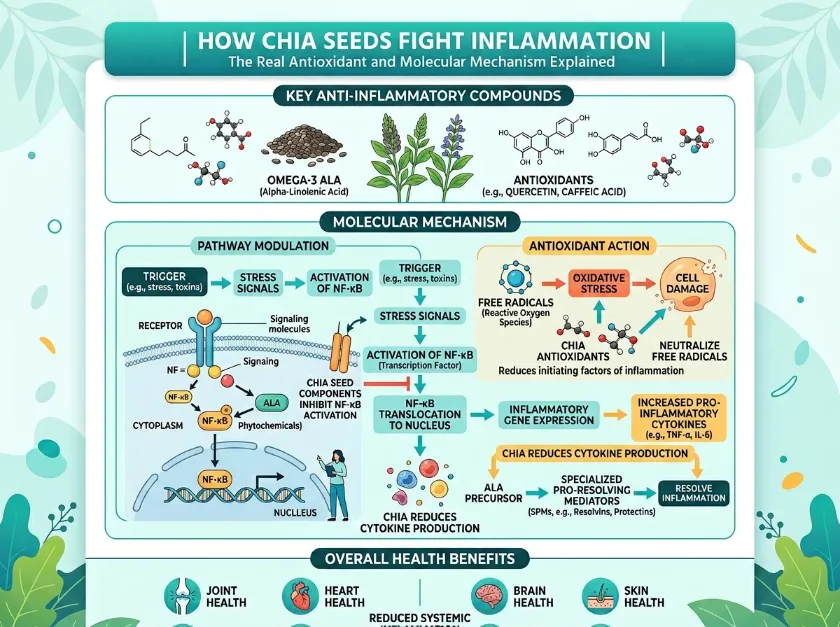
Chia seed’s therapeutic effects include anti-inflammatory, antioxidant, antidepressant, and antianxiety properties, with quercetin and chlorogenic acid among its most active antioxidant compounds. These directly inhibit the NF-kB inflammatory pathway — the same signalling cascade that drives prostaglandin overproduction in the uterus.
For the molecular detail on how chia seeds fight inflammation — including COX-2 inhibition and gut butyrate production — read how chia seeds fight inflammation on Seeds Benefits.
The 8-Week Chia Seed Protocol for Period Pain
This is a structured, cycle-aware approach — not “add to smoothie and hope.”
Phase 1: Foundation Building (Weeks 1 to 4, Follicular + Ovulation Phase)
Daily dose: 2 tablespoons (28g) chia seeds
Timing: Morning, with breakfast
Method: Soaked overnight in 250ml water, oat milk, or almond milk (soaking improves digestibility and hydration)
Goal: Begin shifting omega-6 to omega-3 membrane ratio; start building magnesium reserves
Pair chia seeds with magnesium-rich foods in this phase: spinach, dark chocolate, pumpkin seeds, black beans. You are stacking magnesium from multiple food sources.
Phase 2: Luteal Phase Support (Weeks 5 to 8, Day 15 to Day 28 of Your Cycle)
Daily dose: 2 to 3 tablespoons (28g to 42g)
Timing: Morning and afternoon
Add: Ginger (anti-inflammatory, independently reduces dysmenorrhea in clinical trials), turmeric with black pepper (curcumin + piperine for enhanced absorption), and magnesium-rich dark leafy greens
Avoid: Ultra-processed foods, refined sugar, and excess caffeine — all of which drive prostaglandin production and deplete magnesium
Goal: Maintain anti-inflammatory nutritional status through the peak symptom window
Phase 3: Menstruation (Days 1 to 5)
Continue 2 tablespoons daily. Focus on hydration — adequate fluid is non-negotiable for chia seed effectiveness and directly reduces cramping intensity by supporting circulation. Add warm ginger tea and iron-rich foods to support energy and replenishment.
What to Combine With Chia Seeds for Stronger Results
Chia seeds work best in combination. Think of them as the anchor of an anti-inflammatory nutritional pattern.
Ginger: Clinically shown to reduce dysmenorrhea in multiple randomised controlled trials. Add 1 to 2 grams of fresh or powdered ginger daily in the luteal phase and during menstruation.
Turmeric (with black pepper): Curcumin inhibits COX-2 and NF-kB pathways — directly reducing prostaglandin production. Black pepper increases curcumin absorption by approximately 2,000%.
Dark leafy greens (spinach, kale): Additional magnesium, iron, and folate. The combination of chia seeds and leafy greens provides a meaningful portion of daily magnesium from food alone.
Algal oil (for vegans or plant-based eaters): Provides DHA directly, bypassing the inefficient ALA conversion step. This is the most practical way to amplify the omega-3 benefits of chia seeds without eating fish.
Reduced ultra-processed food intake: This is the often-ignored half of the equation. Adding chia seeds to a diet high in processed seed oils and refined sugar is like adding one sandbag to a leaking wall. The omega-6 load from processed food directly competes with the omega-3s in chia seeds for the same membrane sites.
Chia Seeds vs. Other Natural Approaches for Period Pain: Honest Comparison
| Approach | Evidence Strength | Time to Effect | Notes |
|---|---|---|---|
| Chia seeds (daily) | Moderate — strong mechanistic basis | 6 to 8 weeks | Best as part of broader dietary pattern |
| Ginger supplementation | Strong — multiple RCTs | 2 to 3 cycles | Works for dysmenorrhea specifically |
| Magnesium supplementation | Strong — 2017 systematic review | 2 to 3 cycles | More bioavailable than food sources alone |
| Omega-3 fish oil | Strong — multiple meta-analyses | 6 to 8 weeks | Higher EPA/DHA than chia ALA |
| Ibuprofen (NSAIDs) | Very strong — direct mechanism | Immediate | Symptom relief only; no root-cause change |
| Heat therapy | Moderate | Immediate | Effective adjunct; not curative |
Chia seeds occupy the preventive, root-cause layer of this table. They do not replace immediate pain relief when needed. They reduce how much you need it over time.
Practical Chia Seed Recipes Optimised for Period Pain
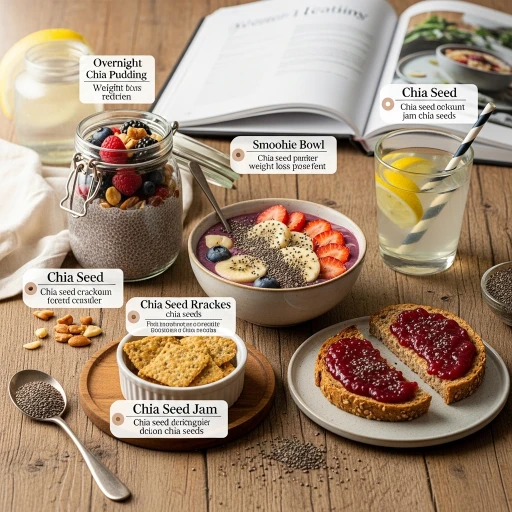
Overnight Anti-Inflammatory Chia Pudding
Mix 3 tablespoons chia seeds into 1 cup of oat milk. Add 1/2 teaspoon turmeric, 1/4 teaspoon ginger powder, and 1 teaspoon raw honey. Refrigerate overnight. Top with mixed berries (antioxidants), a handful of walnuts (additional ALA omega-3), and a pinch of black pepper to activate curcumin. This single breakfast delivers omega-3, magnesium, quercetin, curcumin, and prebiotic fiber simultaneously.
Luteal Phase Smoothie
Blend 2 tablespoons soaked chia seeds, 1 cup spinach, 1/2 frozen banana, 1 cup frozen mango, 1cm fresh ginger, 1 tablespoon almond butter, and 1.5 cups oat milk. Blend until smooth. Drink within 20 minutes of blending. This provides omega-3 ALA, magnesium from spinach and almond butter, anti-inflammatory ginger, and potassium from banana to reduce bloating.
Period-Day Chia Water
Soak 1 tablespoon chia seeds in 400ml warm water for 15 minutes. Add fresh lemon juice and a pinch of sea salt. Drink slowly. Unglamorous but effective — this maximises hydration during menstruation when water intake directly reduces cramp intensity.
When Chia Seeds Are Not Enough
This needs to be said plainly.
Chia seeds support a healthy inflammatory environment in a healthy body. They cannot treat conditions that generate their own pain independently of prostaglandin levels.
If you experience any of the following, please see a gynaecologist — not just a nutritionist:
- Period pain severe enough to cause vomiting, fainting, or inability to function
- Pain that worsens year-over-year rather than remaining stable
- Pain during sex, during bowel movements, or outside of menstruation
- Periods consistently heavier than normal with significant clotting
- Pain that does not respond meaningfully to ibuprofen
These may indicate endometriosis, adenomyosis, fibroids, or pelvic inflammatory disease. All of these require medical diagnosis and specific treatment. Dietary optimisation is a valuable complement to that treatment — not a substitute for it.
Chia seeds reduced one woman’s cramp-related ibuprofen use from four tablets per cycle to zero. They had no measurable effect on her friend’s pain — because her friend had endometriosis. Both outcomes are real. Both matter.
Frequently Asked Questions
How long before my period should I start eating chia seeds? Start daily consumption at least 6 to 8 weeks before expecting cycle benefits. Chia seeds build omega-3 membrane ratios and magnesium reserves gradually. Taking them the week before your period will not produce meaningful relief in that cycle.
Can chia seeds replace ibuprofen for period cramps? Not as an immediate swap. Ibuprofen directly blocks prostaglandin production within hours. Chia seeds reduce the prostaglandin load your body produces over time. Many women report needing significantly less ibuprofen after 2 to 3 cycles of consistent chia seed consumption — but this is a gradual shift, not an overnight substitution.
Are chia seeds better than flaxseeds for PMS? Both are effective omega-3 sources. Chia seeds are more shelf-stable (flaxseeds go rancid when exposed to heat and light) and do not need to be ground for absorption. Flaxseeds have a higher lignan content, which provides additional phytoestrogen activity. For daily practical use, chia seeds are the more reliable choice. For hormonal estrogen modulation specifically, ground flaxseeds have a slight edge.
How much chia should I eat per day for period pain? Two tablespoons (28g) daily is the standard effective dose. Some women increase to 3 tablespoons (42g) during the luteal phase. Always consume with adequate fluid — a minimum of 250ml per serving. Maximum suggested intake in some markets is 15g; however, many practitioners use 28g (2 tablespoons) as the standard daily dose safely.
Do chia seeds help with PCOS-related period pain? PCOS-related pain has a stronger inflammatory and insulin-resistance component than standard dysmenorrhea. Chia seeds address both: the omega-3s reduce inflammation and the fiber supports insulin sensitivity. A 2025 systematic review in Cureus examining seed-based interventions for PMS and PCOS noted that seeds consumed in cycle-aligned phases showed promising effects on hormonal symptom scores. More research is needed, but the mechanistic case is strong.
Can I eat chia seeds during my period itself? Yes — and you should. During menstruation, continue your daily dose for magnesium, iron, and anti-inflammatory support. Focus on hydration. Warm chia pudding or chia water is easier on the stomach during cramps than cold preparations.
What if chia seeds cause bloating instead of reducing it? This almost always comes from insufficient hydration. Dry or under-soaked chia seeds expand using fluid from your digestive tract, causing bloating. Always soak chia seeds in at least 4 times their volume of liquid for a minimum of 15 minutes before consuming. Start with 1 tablespoon if you are new to high-fiber foods and build up over two weeks.
Key Takeaways
Chia seeds reduce period pain through three overlapping mechanisms: omega-3 ALA shifts the prostaglandin balance away from inflammatory types; magnesium directly relaxes uterine smooth muscle and inhibits prostaglandin synthesis; and soluble fiber supports estrogen clearance and reduces luteal-phase bloating.
The evidence is mechanistically sound and directionally consistent across multiple studies. It is not yet the level of a large randomised controlled trial specific to chia seeds and dysmenorrhea — and any article that implies otherwise is overstating the case.
What the evidence does support: consistent daily chia seed consumption (2 tablespoons, for 6 to 8 weeks minimum) as part of an anti-inflammatory dietary pattern meaningfully improves the nutritional environment in which your uterus operates each cycle.
Two tablespoons. Every day. Soaked. For eight weeks.
That is a small, low-cost, low-effort habit. And for the majority of women with primary dysmenorrhea, it is one of the highest-return nutritional changes available.
Continue Reading on Seeds Benefits
- Chia Seeds Benefits for Women: 10 Proven Reasons to Start Today
- Chia Seeds for Hormonal Balance and Estrogen: The 5-Pathway Guide
- How Chia Seeds Fight Inflammation: The Real Molecular Mechanism
- Chia Seeds for Menopause: Rebuild Bones and Rebalance Hormones
- Full Chia Seed Benefits Overview
Medical disclaimer: This article provides nutritional education and is not a substitute for medical advice. If you experience severe, worsening, or debilitating period pain, consult a qualified healthcare provider for diagnosis and treatment.