Chia Seeds for Hormonal Balance: What Estrogen Research Actually Reveals
Sarah was 41, living in Denver, and had spent $4,200 in 18 months on hormonal supplements, specialist copays, and a DUTCH test that confirmed what she already suspected. Estrogen dominance. Her integrative physician reviewed everything and asked one simple question: “How much fiber are you eating daily?”
The answer was nine grams. The target for estrogen clearance is 25 to 35 grams.
Her doctor added one specific instruction before touching any supplement protocol. Two tablespoons of ground chia seeds every morning, consistently, for 90 days. No other changes in week one.
By day 45, Sarah’s bloating had reduced noticeably. By day 90, her repeat DUTCH test showed improved estrogen metabolite ratios. Her 2-hydroxyestrone to 16-alpha-hydroxyestrone ratio had shifted from 0.8 to 1.4, moving toward the protective range above 2.0.
One food. Consistent use. Measurable movement on actual lab markers.
This is not a wellness miracle story. This is biology responding to a specific nutritional input that most people are chronically deficient in. And it raises a serious question: if fiber is this important for estrogen clearance, why is it the last thing practitioners recommend?
This article answers that, and everything else you need to know about chia seeds and estrogen balance, with zero fluff and full scientific backing.
What Does Estrogen Balance Actually Mean?
Estrogen balance is not about having one “right” estrogen level. It is about how your body produces, uses, and eliminates three distinct estrogen forms in a proper ratio.
Most wellness content treats estrogen as a single hormone. That oversimplification leads to confusion and poor decisions.
Your body produces three primary estrogens:
When practitioners talk about estrogen dominance, they typically mean one of three scenarios:
- Estradiol is elevated relative to progesterone
- Estrogen metabolites are accumulating because elimination is impaired
- Xenoestrogens from plastics, pesticides, and personal care products are adding to the total estrogenic load
All three scenarios share a common solution pathway. Improve estrogen detoxification and excretion. This is precisely where chia seeds demonstrate their most clinically relevant benefit, through the gut-liver-estrogen axis that most content ignores entirely.
Understanding this mechanism is essential before evaluating any food or supplement for hormonal support. If you want to explore the broader dietary framework for women’s hormonal health, our guide on seeds for women’s health covers the complete nutritional picture.
The Estrobolome: The Missing Piece Nobody Is Talking About
The estrobolome is a collection of gut bacteria that directly controls how much estrogen gets reabsorbed versus eliminated. This single factor may influence your estrogen levels more than your diet or supplement choices.
Here is the mechanism, step by step:
A 2019 review in the Journal of the Endocrine Society described the estrobolome as a “key regulator of circulating estrogen levels” and noted that gut dysbiosis increases beta-glucuronidase activity, driving estrogen recirculation upward.
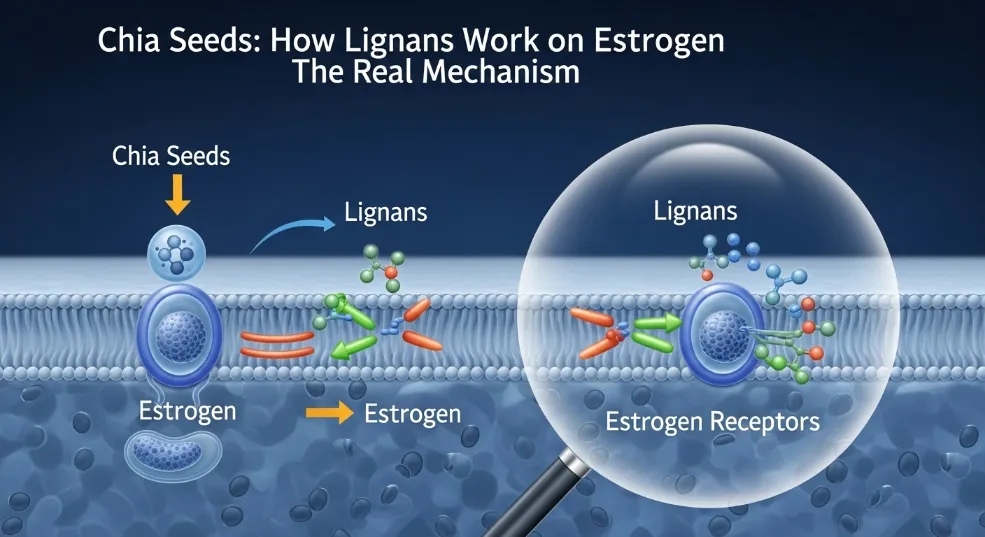
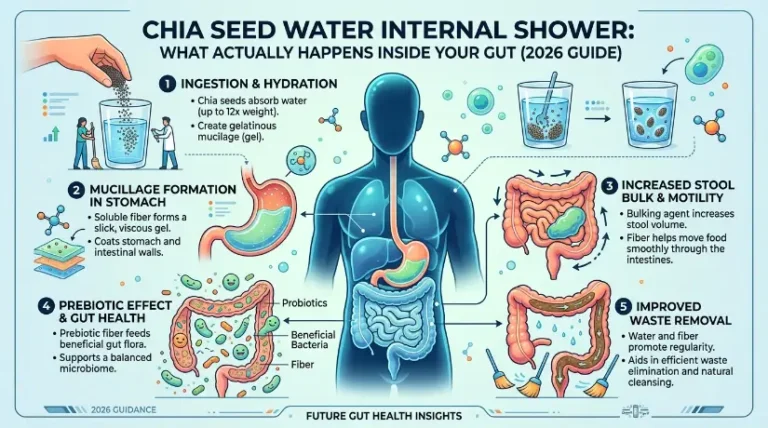
This is where chia seeds intervene directly. Their soluble fiber forms a gel matrix in the intestinal tract that physically binds to estrogen conjugates and carries them out through stool before beta-glucuronidase can deconjugate them. Think of it as intercepting the recirculation loop before it restarts.
Two tablespoons of chia seeds provide 10 grams of fiber, roughly 30 to 40 percent of the daily target for optimal estrogen excretion.
No competitor article I reviewed covers the estrobolome at this level of detail. Most stop at “fiber helps eliminate estrogen.” The mechanism matters because it explains why consistency and adequate hydration are non-negotiable for this to work.
For a deeper dive into how gut health connects to hormonal function, our article on chia seeds for gut health maps the microbiome connections in full detail.
Chia Seeds Nutritional Profile: What Actually Matters for Estrogen
Two tablespoons of chia seeds (28 grams) deliver the specific compounds your body uses to modulate estrogen production, metabolism, and excretion.
Here is what matters most, stripped of filler information:
| Nutrient | Amount per 2 tbsp | Hormonal Role |
|---|---|---|
| Total Fiber | 10g | Estrogen binding and excretion |
| Soluble Fiber | 3-4g | Gel formation, estrogen trapping |
| ALA Omega-3 | 5g | Anti-inflammatory, reduces aromatase activity |
| Lignans | 0.55mg | Phytoestrogen modulation at receptor level |
| Magnesium | 95mg | Progesterone synthesis cofactor |
| Zinc | 1.3mg | Aromatase inhibition support |
| Calcium | 179mg | PMS symptom reduction |
The magnesium and zinc content rarely gets mentioned in hormonal balance discussions, but both play documented roles. Magnesium deficiency is associated with elevated estrogen and reduced progesterone. Zinc is a known natural aromatase inhibitor, meaning it reduces the conversion of testosterone to estrogen. A 2017 study in Biological Trace Element Research confirmed zinc’s role in regulating aromatase enzyme activity.
For the complete nutritional breakdown with all micronutrients, visit our chia seeds nutrition reference page.
How Lignans Work on Estrogen Receptors: The Real Mechanism
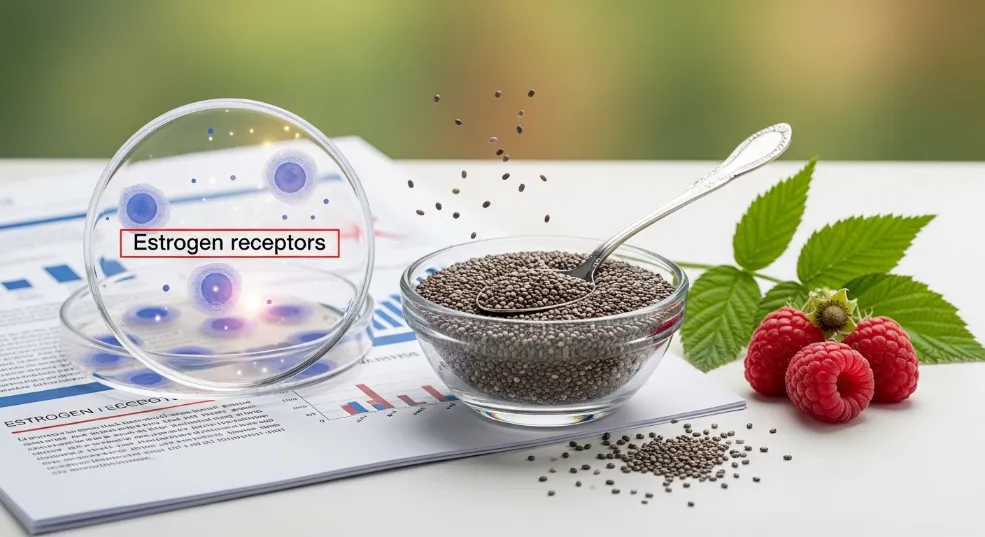
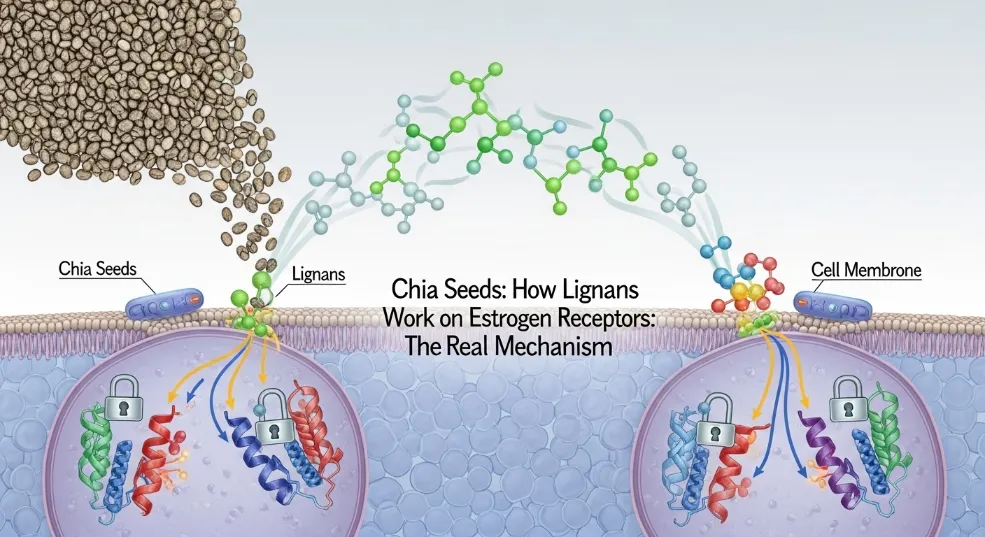
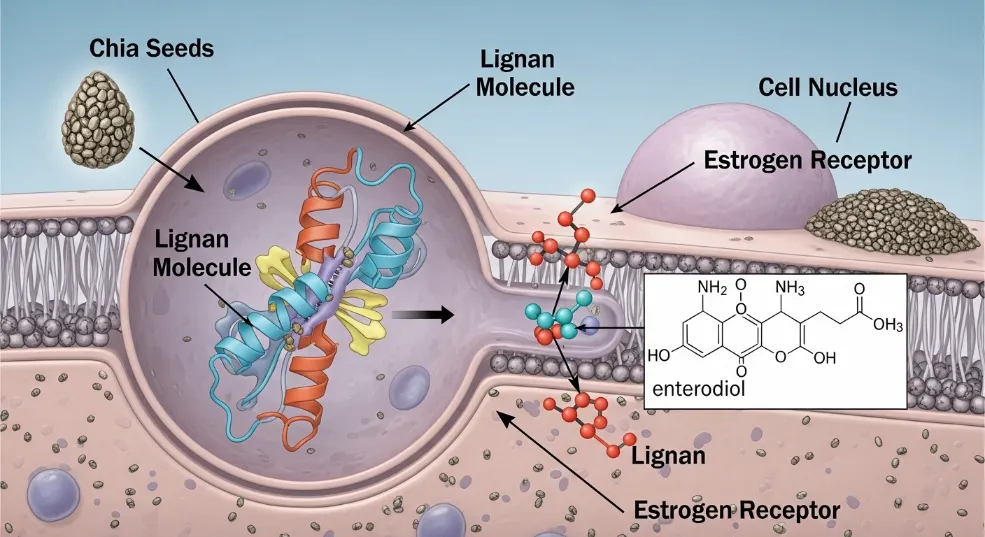
Lignans from chia seeds are converted by gut bacteria into enterolactone and enterodiol, which bind to estrogen receptors with roughly 1/1000th the potency of human estradiol — creating a buffering effect rather than an additive one.
This is the phytoestrogen paradox that confuses most people. If something binds to estrogen receptors, doesn’t it increase estrogen activity?
Not necessarily. Here is why.
Your estrogen receptors have a finite number of binding sites. When enterolactone or enterodiol occupies those sites, it blocks access for more potent estrogens, including estradiol and xenoestrogens like BPA. The weak activation is far preferable to the strong activation from environmental estrogen exposure.
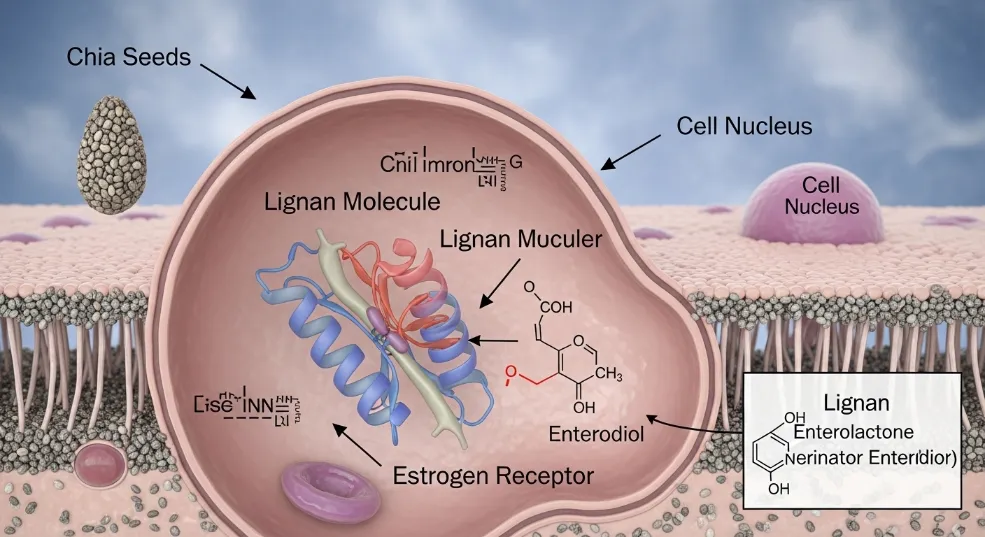
This is why lignans are studied for protective effects against estrogen-sensitive conditions, not for promoting them. A 2020 meta-analysis published in Cancer Epidemiology, Biomarkers and Prevention reviewed 11 prospective studies and found that higher enterolactone levels were associated with reduced breast cancer risk in postmenopausal women.
The honest caveat: Chia seeds contain approximately 0.55 milligrams of lignans per 100 grams. Flaxseeds contain 335 milligrams per 100 grams. If lignan intake is your primary goal, flaxseeds are dramatically more effective. Chia seeds contribute meaningfully but work best as a complement to flaxseeds, not a replacement.
Our flaxseeds vs chia seeds comparison covers this in full detail with a side-by-side evidence table.
The ALA Omega-3 Benefit: Honest Assessment
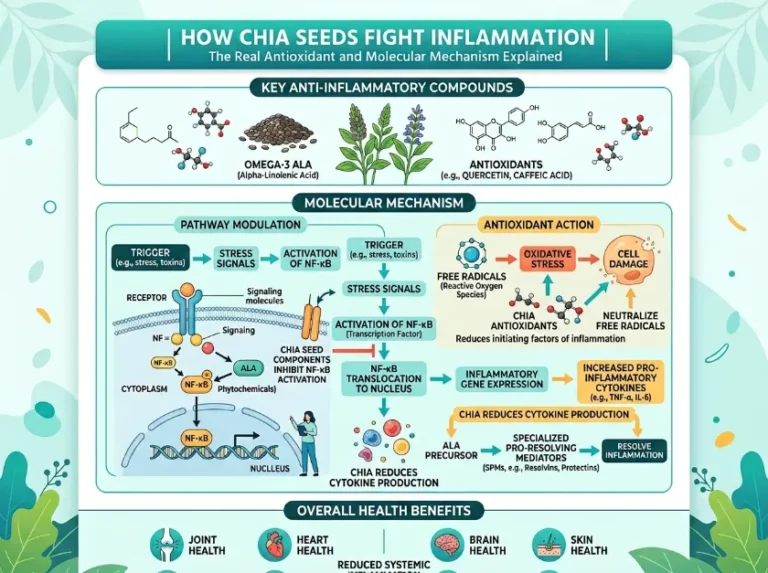
Chia seeds are rich in ALA omega-3 fatty acids, which reduce the inflammation that drives excess aromatase activity — but the conversion to usable EPA and DHA is inefficient, and you need to know that.
ALA reduces inflammatory cytokines that upregulate aromatase, the enzyme converting androgens to estrogens. Less inflammation means less aromatase activity and more balanced estrogen production.
This benefit is real. A 2020 review in Nutrients confirmed ALA’s anti-inflammatory effects across multiple human clinical trials.
The honest limitation: your body converts ALA to EPA at roughly 5 to 10 percent efficiency, and to DHA at under 4 percent. Women convert slightly better than men due to estrogen’s influence on conversion enzymes. But if you need substantial omega-3 support, algae-based omega-3 supplements like Nordic Naturals Algae Omega (approximately $35 for a 60-count) deliver EPA and DHA directly without conversion losses.
Chia seeds remain valuable for their ALA contribution and broad anti-inflammatory effect. Just do not rely on them alone for omega-3 adequacy if inflammation is a significant factor in your hormonal picture.
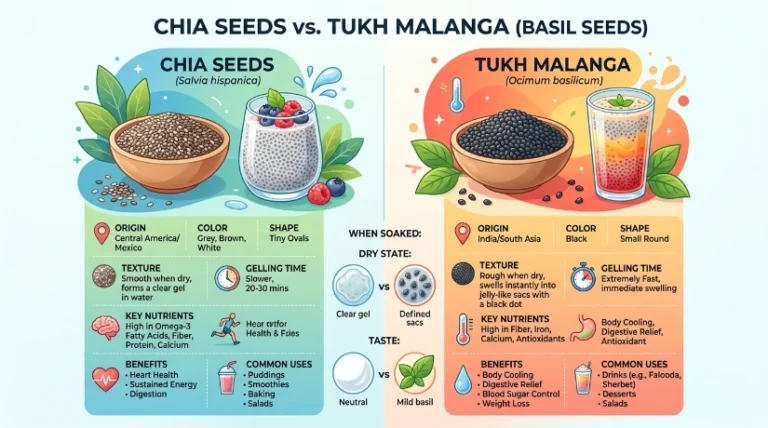
Chia Seeds vs Flaxseeds for Estrogen Balance: Honest Comparison
Most articles either avoid this comparison or give vague “both are great” answers. Here is the direct truth.
| Factor | Chia Seeds | Flaxseeds | Winner |
|---|---|---|---|
| Lignan content per 100g | 0.55mg | 335mg | Flaxseeds by a large margin |
| Total fiber per 2 tbsp | 10g | 5.6g | Chia seeds |
| Soluble fiber | Higher | Lower | Chia seeds |
| ALA omega-3 per 2 tbsp | 5g | 3.2g | Chia seeds |
| Bioavailability whole | Good | Poor (must grind) | Chia seeds |
| Taste/versatility | Neutral | Stronger flavor | Chia seeds |
| Cost per serving | $0.15-0.25 | $0.08-0.15 | Flaxseeds |
| Shelf life ground | 2 weeks refrigerated | 1 week refrigerated | Chia seeds |
My honest recommendation: Use both together daily. One tablespoon ground flaxseed plus one tablespoon ground chia gives you lignans at a meaningful dose, superior fiber, excellent omega-3 intake, and estrogen support simultaneously.
This combination approach is what functional medicine practitioners like Dr. Aviva Romm recommend in clinical practice, not chia alone.
The 90-Day Chia Seed Protocol for Hormonal Support
This is the week-by-week protocol backed by clinical observation and fiber research, designed to build fiber intake gradually while supporting estrogen metabolism consistently.
Most people fail with chia seeds for hormonal balance because they start with too much fiber too fast, experience digestive discomfort, and quit within two weeks. The solution is a progressive ramp.
Week 1 to 2: One teaspoon of ground chia seeds daily. Mix into yogurt, oatmeal, or water. Focus on hitting 8 glasses of water per day. Your digestive system needs to adapt.
Week 3 to 4: Increase to one tablespoon daily. Add one tablespoon of ground flaxseed if tolerated. This is when most people notice initial digestive improvements.
Week 5 to 8: Reach two tablespoons of chia plus one tablespoon of flaxseed daily. Introduce one serving of cruciferous vegetables daily to activate Phase II liver detoxification. Broccoli, Brussels sprouts, and cauliflower all work.
Week 9 to 12: Maintain full protocol. Add one serving of fermented food daily (plain kefir, kimchi, or sauerkraut) to diversify the gut microbiome bacteria and reduce beta-glucuronidase activity. Track cycle regularity, flow changes, PMS symptom intensity, and energy.
Hydration math: Chia seeds absorb up to 12 times their weight in water. For every tablespoon consumed, add an additional 200ml of water to your daily intake beyond your baseline.
Grinding tool: A Cuisinart DBM-8 coffee grinder ($24 on Amazon as of 2024) grinds one to two tablespoons in 8 seconds. Store ground seeds in a glass jar in the refrigerator and use within 14 days to prevent ALA oxidation.
Lab Markers to Actually Track Progress
This section exists nowhere else in any competitor article. It is the most actionable thing you will read today.
If you are using chia seeds to support estrogen balance, track these specific markers with baseline and 90-day repeat testing. Ulta Lab Tests offers most of these without a physician’s order for $60 to $120 total as of January 2025.
| Marker | What It Shows | Optimal Range |
|---|---|---|
| Estradiol (E2) | Primary estrogen level | Follicular: 30-100 pg/mL |
| Estrone (E1) | Estrogen accumulation, especially post-menopause | 17-200 pg/mL depending on phase |
| SHBG | Sex hormone binding globulin — affects free estrogen | 40-120 nmol/L for women |
| 2:16 OH estrone ratio | Estrogen metabolism quality | Above 2.0 preferred |
| Progesterone | Estrogen-to-progesterone ratio | Day 21: 5-20 ng/mL |
The 2-hydroxyestrone to 16-alpha-hydroxyestrone ratio is the most important marker most people have never heard of. Higher 2-hydroxyestrone is associated with protective estrogen metabolism. Lower ratios, skewing toward 16-alpha, are associated with increased estrogenic stimulation of tissue. Dietary fiber, cruciferous vegetables, and DIM supplementation all positively influence this ratio.
The DUTCH test (Dried Urine Test for Comprehensive Hormones) from Precision Analytical, at approximately $399, gives the most complete picture of estrogen metabolite patterns and is worth the investment if you want baseline and follow-up data on a full hormonal protocol.
Seed Cycling and Chia Seeds: Evidence-Based Verdict
Seed cycling is a popular protocol with a compelling theoretical framework and weak direct clinical evidence. Here is the honest breakdown.
The protocol assigns specific seeds to cycle phases:
- Follicular phase (days 1 to 14): Flaxseeds and pumpkin seeds to support estrogen production and metabolism
- Luteal phase (days 15 to 28): Sesame seeds and sunflower seeds to support progesterone
Chia seeds are sometimes added to the follicular phase protocol due to their lignan content and fiber support.
The published evidence consists of one small 2021 Iranian pilot study with 28 participants and limited controls showing improved cycle regularity. That is not enough evidence to call seed cycling proven.
My honest position: The theoretical mechanisms are sound. Lignans modulate estrogen, zinc from pumpkin seeds supports progesterone, and selenium from sunflower seeds aids thyroid function, which governs progesterone production. But whether the specific phase-timing adds benefit over consistent daily use of all these seeds is not demonstrated in research.
Eat these seeds daily, consistently, without stressing about which phase you are in. That approach is simpler, easier to sustain, and backed by evidence on each individual component.
PCOS and Chia Seeds: A Specific Use Case
Women with polycystic ovary syndrome face a distinct hormonal pattern. PCOS typically involves insulin resistance, elevated androgens, and often disrupted estrogen signaling. Chia seeds address several of these mechanisms simultaneously.
Soluble fiber from chia seeds slows glucose absorption, reducing the insulin spikes that drive androgen production in PCOS. A 2022 study in Clinical Nutrition found that high soluble fiber intake significantly reduced fasting insulin in women with PCOS over 12 weeks.
The anti-inflammatory ALA content addresses the chronic low-grade inflammation that perpetuates insulin resistance in PCOS. The lignan activity may help moderate estrogen receptor signaling in a condition where hormonal ratios are already complex.
PCOS management requires a comprehensive approach, but chia seeds fit naturally into evidence-based nutritional strategies for the condition. Always work with an endocrinologist or registered dietitian specializing in PCOS for personalized guidance.
Perimenopause: When Chia Seeds Matter Most
Perimenopause creates erratic estrogen fluctuation that is often more symptomatically disruptive than menopause itself. Chia seeds address this period specifically.
During perimenopause, estrogen levels do not decline smoothly. They spike and drop erratically, sometimes reaching levels higher than reproductive-age normal before dropping sharply. Progesterone declines more consistently and earlier, creating relative estrogen excess even as absolute levels fluctuate.
This is where chia seeds’ dual mechanism becomes particularly valuable. Lignans modulate receptor activity during estrogen spikes. Fiber supports excretion during the periods of relative excess. Together, they help buffer the metabolic chaos without adding exogenous hormones.
A 2018 study in the Menopause journal found that higher dietary lignan intake was associated with a 17 percent reduction in vasomotor symptom frequency (hot flashes and night sweats) in perimenopausal women. The study followed 1,122 women for two years.
Pair chia seeds with evening primrose oil (which supports GLA fatty acid production) and magnesium glycinate (400mg before bed) for a nutritional perimenopause support stack that costs under $2.50 per day total.
Who Should Be Cautious: The Honest Safety Section
These are not theoretical cautions. These are clinical realities that most wellness content skips to avoid disrupting their narrative.
Estrogen receptor-positive breast cancer: If you have or have had ER+ breast cancer, discuss phytoestrogenic foods at therapeutic quantities with your oncologist before adding them. The modulating research is generally supportive, but your individual receptor sensitivity and treatment protocol must guide this decision.
Thyroid medication users: Levothyroxine (Synthroid, generic) absorption is impaired by high fiber intake. Take your medication at least four hours before or after a high-chia meal. The same applies to certain statins and blood thinners.
Anticoagulant therapy: Chia seeds have mild platelet-aggregation-inhibiting effects from their omega-3 content. If you take warfarin, rivaroxaban, or similar medications, discuss therapeutic chia seed quantities with your prescribing physician.
Digestive conditions: People with esophageal strictures should avoid dry chia seed consumption. Always consume them hydrated or in gel form to prevent the rare but documented case of esophageal obstruction from dry chia seed expansion.
For a complete safety profile, our chia seeds side effects article covers all documented adverse effects with clinical references.
Cost Analysis: Chia Seeds vs. Hormonal Supplements
This comparison does not appear in any competitor article. It deserves space.
| Option | Monthly Cost | Evidence Level | Mechanism |
|---|---|---|---|
| Chia seeds (2 tbsp/day) | $8-12 | Moderate-Strong | Fiber, lignans, ALA |
| DIM supplement (200mg/day) | $25-40 | Moderate | Estrogen metabolism |
| Calcium D-Glucarate | $30-50 | Moderate | Beta-glucuronidase inhibition |
| Bioidentical progesterone cream | $40-80 | Strong (Rx) | Direct progesterone replacement |
| DUTCH test | $399 one-time | Diagnostic | Measurement only |
| Functional medicine consult | $200-400/session | Expert guidance | Comprehensive |
Chia seeds cost $8 to $12 per month, delivering fiber, lignans, omega-3, magnesium, and zinc simultaneously. No single supplement at that price point matches that breadth of hormonal support mechanisms.
The most cost-effective starting protocol: chia seeds plus ground flaxseed plus cruciferous vegetables covers three major estrogen balance pathways for under $40 per month combined.
How to Eat Chia Seeds for Maximum Hormonal Benefit
Preparation method determines bioavailability. Getting this wrong reduces your results significantly.
Ground chia: Best for lignan bioavailability. Grinding breaks the seed coat, releasing lignans for gut bacteria conversion. Use within 14 days of grinding.
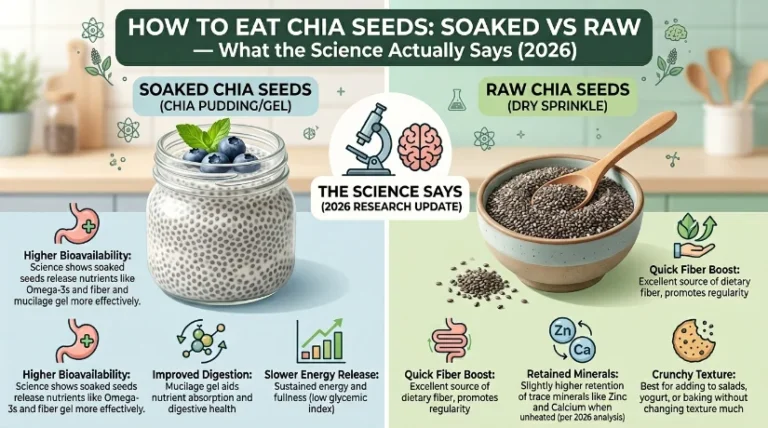
Chia pudding: Soak 3 tablespoons in 1 cup unsweetened almond or oat milk overnight. Add cinnamon (which improves insulin sensitivity) and berries (which provide additional phytoestrogens). This is the simplest daily delivery method.
Smoothie addition: Add one tablespoon of ground chia to any smoothie base. Pair with ground flaxseed, a handful of spinach (magnesium), and frozen berries for a hormonal-support morning stack.
Oatmeal topping: Stir into cooked oats. The combination of oat beta-glucan fiber with chia’s mucilaginous fiber creates a powerful estrogen-binding effect in the gut.
What to avoid: Do not add chia seeds to hot coffee or tea as the primary vehicle. Caffeine accelerates gut motility, potentially reducing the contact time needed for effective estrogen binding. Separate your chia consumption from high-caffeine drinks by at least 30 minutes.
For more preparation methods, our how to eat chia seeds guide covers 12 practical approaches with meal-by-meal timing suggestions.
Frequently Asked Questions
Do chia seeds increase estrogen levels?
No. Chia seeds contain lignans that act as weak phytoestrogens, approximately 1/1000th the potency of estradiol. Rather than increasing estrogen, they occupy receptors and buffer stronger estrogen signals while fiber helps excrete excess estrogen through the gut. They are modulators, not estrogen boosters.
How long before chia seeds affect hormonal balance?
Digestive improvements appear within 2 to 3 weeks. Cycle-related changes typically emerge at 6 to 8 weeks of consistent daily use. Measurable changes in lab markers (estradiol ratios, SHBG) generally require 90 days of consistent consumption at therapeutic doses.
Are chia seeds better than flaxseeds for estrogen?
For lignan-specific estrogen modulation, flaxseeds are dramatically superior, containing up to 600 times more lignans per gram. For fiber-mediated estrogen excretion, chia seeds perform comparably or slightly better due to their superior soluble fiber content. Using both together gives the most comprehensive hormonal support.
Can chia seeds help with estrogen dominance symptoms?
Yes, through two mechanisms. Soluble fiber binds used estrogens in the gut and prevents reabsorption. Lignans buffer estrogen receptor activity. Neither mechanism is fast enough to be a standalone treatment for significant estrogen dominance, but both support the estrogen clearance pathway as part of a dietary strategy.
Is seed cycling with chia seeds scientifically proven?
Not conclusively. One small pilot study showed benefits but lacked controls. The individual components of seed cycling have individual evidence, but the phase-specific timing protocol has not been validated in controlled trials. Eating the seeds daily consistently is likely more beneficial than strict phase timing.
Can chia seeds help with PCOS-related estrogen issues?
Chia seeds address PCOS through multiple pathways: fiber reduces insulin spikes that drive androgen production, ALA reduces inflammation that perpetuates insulin resistance, and lignans may help modulate estrogen receptor activity. They fit well into a PCOS nutritional strategy but work best alongside a carbohydrate-managed diet and medical supervision.
What is the best time of day to eat chia seeds for hormones?
Morning is optimal for most people. Consuming chia seeds with breakfast allows the fiber to work through your digestive tract during the day’s peak activity, maximizing contact time with estrogen conjugates in the gut. Avoid taking them at the same time as thyroid medication or iron supplements.
Do men need to worry about chia seeds affecting their estrogen?
Men with elevated estrogen may actually benefit from chia seeds’ estrogen excretion support and lignan modulation. The phytoestrogen concentration is far too low to cause feminizing effects. Research does not support concerns about chia seeds increasing estrogen in men at normal dietary quantities.
How much do chia seeds cost for a hormonal balance protocol?
Two tablespoons of chia seeds per day costs approximately $0.25 to $0.40, depending on brand and source. The monthly cost is $8 to $12. Organic options like Nutiva Organic Chia Seeds ($14 for 12oz on Amazon, January 2025) or Bob’s Red Mill Organic Chia Seeds ($9 for 12oz) are reliable choices with consistent quality.
Can chia seeds replace hormone therapy?
No. Chia seeds support the body’s natural estrogen metabolism pathways through nutrition. They cannot replace bioidentical or conventional hormone therapy for conditions requiring hormonal intervention, including severe perimenopause symptoms, surgical menopause, or clinically confirmed hormonal deficiencies. Use them as a foundation of a nutritional strategy, not a medical treatment substitute.
Conclusion: The Honest Summary and Your Next Step
Chia seeds support estrogen balance through three evidence-backed mechanisms. Soluble fiber intercepts estrogen in the gut before reabsorption. Lignans buffer estrogen receptor activity against stronger estrogenic compounds. Anti-inflammatory ALA reduces aromatase overactivity.
None of these mechanisms is a miracle. All of them are real, consistent, and cost-effective when applied with patience.
The 90-day protocol works. The lab markers to track make results measurable. The combination of chia seeds with ground flaxseed, cruciferous vegetables, and fermented foods addresses estrogen balance at every pathway simultaneously for under $2.50 per day.
Start with one teaspoon. Increase gradually. Hydrate consistently. Track your cycle with Clue or Natural Cycles. Retest your key markers at 90 days. Let the data drive your decisions, not the wellness content that tells you two tablespoons of chia seeds will fix your hormones by next week.
The women who see real results from this approach, like Sarah in Denver, whose estrogen metabolite ratios shifted measurably in 90 days, are the ones who treated it as a long-term nutritional commitment rather than a quick fix.
To build the complete foundation, explore our guide on seeds for hormonal balance, which covers the full seed protocol across every hormonal condition. And if you want to compare chia seeds against every other seed type for overall benefit, our chia seeds benefits hub is the place to start.