Chia Seed Water Internal Shower: What Actually Happens Inside Your Gut (2026 Guide)
A gastroenterologist at OSF HealthCare called it “a very good, natural way to incorporate fiber into your diet.”
Dr. Karan Rajan — a surgeon with 5.4 million TikTok followers — called it “probably one of the first TikTok trends that actually works.”
The US Poison Control Center published a warning about it. With a case study of a 39-year-old man whose esophagus was completely blocked by gelatinized chia seeds.
Three medical experts. Three very different reactions to the same drink. And somewhere in the middle of those three opinions is the truth about chia seed water — what it actually does, how to use it safely, who should avoid it entirely, and why the word “shower” is both accurate and deeply misleading at the same time.
This guide cuts through every piece of influencer noise and gives you the biochemistry, the safety protocol, the exact recipe that works, and the honest answer to whether this is worth adding to your morning routine.
What Is the Chia Seed Water Internal Shower — and Where Did It Come From
Chia seed water — nicknamed the internal shower — is two tablespoons of chia seeds soaked in 300 to 500ml of water for 15 to 20 minutes, typically with lemon juice added, consumed as a drink to support digestion and bowel regularity.
The trend was popularised on TikTok around 2022 by celebrity wellness influencer Daryl Gioffre. It accumulated tens of millions of views. By February 2026, mainstream outlets, including Click2Houston, were still covering it as a current trend. The search volume for “internal shower drink” has remained consistently high for three years — unusual staying power for a social media wellness trend.
The reason it persisted while other trends died is simple: it largely works, for the right people, in the right amounts. That caveat carries most of the weight in this sentence.
Here is the problem with how it went viral: TikTok reduced a genuine digestive intervention to a 30-second clip of someone chugging gelatinous seed water with a lemon. People copied the aesthetic, skipped the soaking, drank dry seeds, and ended up in emergency rooms.
The drink itself is not the danger. The way it went viral created the danger. And that distinction matters for everything that follows.
What Actually Happens Inside Your Body When You Drink Chia Water

Here is the science that no competitor article explains properly.
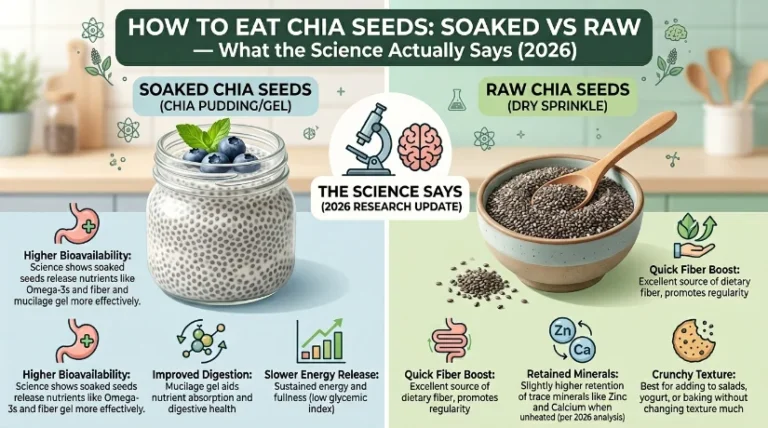
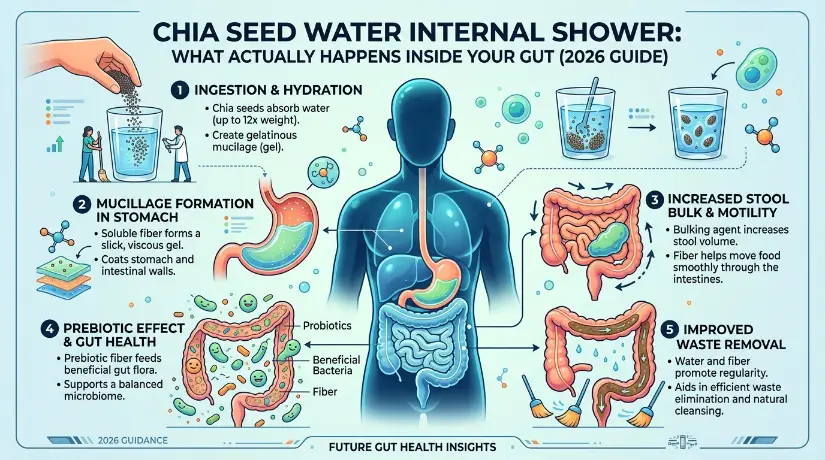
When chia seeds contact liquid, the outer seed coat — called the testa — begins absorbing water immediately. Within 30 seconds, mucilage begins forming. Mucilage is a complex polysaccharide — a long chain sugar — that is stored in the outer cell layers of the seed. As it hydrates, it expands into a transparent gel matrix surrounding each seed.
Chia seeds absorb approximately 10 to 15 times their weight in water. Two tablespoons of dry chia seeds weigh approximately 20g and absorb 200 to 300ml of liquid before the gel reaches full expansion.
What that gel does in your digestive system:
When you swallow properly soaked chia water, the gel matrix enters your stomach. It does not dissolve further. It moves through the small intestine, where it slows carbohydrate absorption and reduces the glycaemic impact of anything else you have eaten. It enters the large intestine, where it adds bulk and moisture to intestinal contents, softening stool and stimulating peristaltic movement — the wave-like muscle contractions that move waste through your colon.
The fibre breakdown:
Two tablespoons of chia seeds contain approximately 10g of total dietary fibre. The breakdown matters for understanding the mechanism:
| Fibre type | Amount per 2 tbsp | What it does in the gut |
|---|---|---|
| Soluble fibre (mucilage) | ~7g | Forms gel, slows digestion, feeds beneficial bacteria |
| Insoluble fibre | ~3g | Adds bulk to stool, speeds transit time |
| Total | ~10g | Approximately 35% of adult daily requirement |
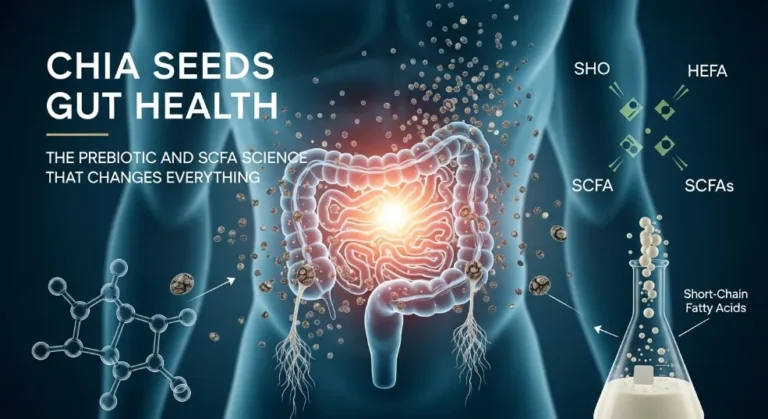
The soluble component feeds your gut microbiome as a prebiotic. The insoluble component physically moves things along. Both are working simultaneously.
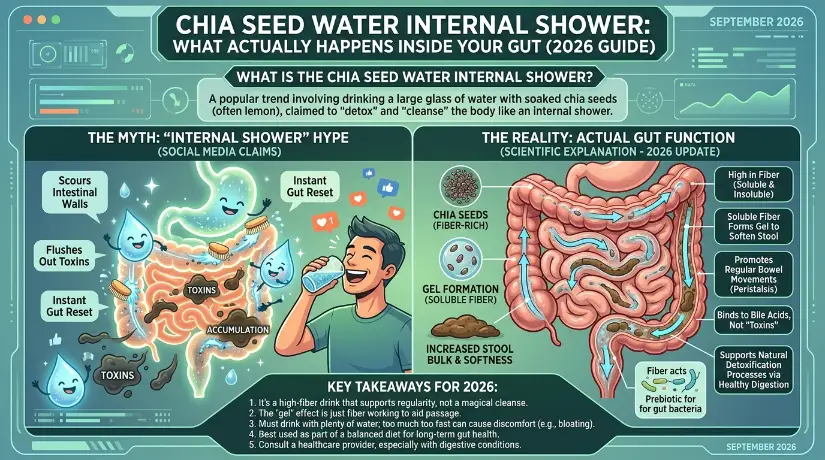
What “internal shower” actually means biochemically: the mucilage gel acts as a hydrating, lubricating agent along the intestinal wall — softening any impacted material and carrying it through. It is not a detox. Your liver and kidneys handle detoxification. It is not a cleanse. It is mechanical fibre-driven intestinal lubrication. Dr. Rajan’s description of “internal drain cleaner” is more accurate than “shower” — though arguably less marketable.
The Exact Recipe — What Actually Works vs What TikTok Shows
Most viral videos show someone pouring seeds into water, waiting two minutes, and drinking immediately. That is not how it works safely or effectively.
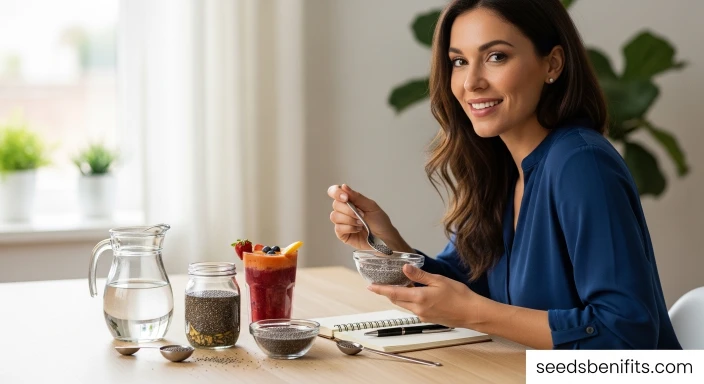
The correct internal shower recipe (clinically informed version):
- Measure 1 to 2 tablespoons of chia seeds (start with 1 tablespoon if new to high-fibre foods)
- Add to 300 to 500ml of room-temperature or cold water
- Stir vigorously for 30 seconds to distribute seeds evenly and prevent clumping
- Let sit for a minimum of 15 minutes — 20 to 30 minutes is optimal
- Stir again before drinking
- Add juice of half a lemon (optional but beneficial — see below)
- Drink the entire glass immediately — do not let it sit further, or it becomes increasingly difficult to consume
- Follow with an additional 200ml of plain water
Why each step matters:
Soaking for 15 minutes minimum allows the mucilage to fully hydrate outside your body. This is the critical safety step that prevents rapid expansion in your esophagus — the mechanism behind the Poison Control case study. Dr. Khokhar at OSF HealthCare explained: “With this particular phenomenon, you’re mixing it to sort of help it expand ahead of time outside of your body instead of inside your body.”
The second glass of water ensures adequate hydration for the fibre to function. Fibre without sufficient water can worsen constipation rather than relieve it.
The lemon addition — what it actually does:
Lemon juice contains citric acid. It mildly activates digestive enzyme production and supports liver bile secretion. It does not “detox” anything. It does not significantly change the fibre mechanism. What it does do is make the drink considerably more palatable, which matters for adherence. It also adds vitamin C, which enhances iron absorption from the chia seeds (relevant for the women’s iron needs covered in the full chia seeds benefits for women guide).
Variations and their evidence base:
| Variation | Addition | Evidence | Notes |
|---|---|---|---|
| Classic | Chia + water + lemon | Most studied | Best starting point |
| ACV version | + 1 tsp apple cider vinegar | ACV: weak evidence for satiety | Adds sourness, minimal extra benefit |
| Ginger version | + fresh grated ginger | Ginger: good evidence for nausea/GI motility | Genuinely useful for IBS-C |
| Mint version | + fresh mint leaves | Mint: mild digestive relaxant | Better taste, minor IBS benefit |
| Warm water version | Replace cold with warm | Warm water: mild peristaltic stimulant | Better for cold-sensitive digestion |
What Time Should You Drink Chia Water for Best Results
The timing question is one of the most-searched related queries and one of the worst-answered.
Morning on an empty stomach: The most popular timing. It allows the gel to move through the digestive system with minimal interference from other food. On an empty stomach, gastric transit is faster, and the fibre bulk reaches the colon within 4 to 8 hours for most people. This is why most people report results by early afternoon when they drink it in the morning.
Before meals: Second most effective timing. The gel matrix slows gastric emptying and reduces the glycaemic impact of the subsequent meal. This is the mechanism most relevant to chia seeds for weight loss — the pre-meal gel reduces postprandial glucose spikes and increases satiety signals before you start eating.
Before bed: Least effective for immediate digestive results but useful for some. Overnight transit can result in morning bowel movement for those who struggle. However, some people find the gel causes mild discomfort when lying down. Not recommended as a starting time.
The 12 to 24 hour expectation: Dr. Karan Rajan specifically warned that effects are “not immediate” and typically take 12 to 24 hours. Anyone expecting to drink chia water at 8 am and experience results by 9 am is going to be disappointed — and may overconsume, thinking it is not working.
Who Should NOT Drink Chia Seed Water — The Critical Safety Section
Every competitor article mentions safety briefly. None of them explains it with enough specificity to be genuinely useful. This section covers the cases that matter.
Absolute contraindications — do not proceed without medical consultation:
Esophageal dysmotility or swallowing disorders — the Poison Control case study involved a 39-year-old man who swallowed dry chia seeds with water. His esophagus was completely obstructed with gelatinous seeds 12 hours later. He required emergency endoscopy. This risk exists with any rapid expansion fibre in people with pre-existing swallowing or esophageal conditions. The soaking protocol greatly reduces this risk in healthy adults — but does not eliminate it in people with known swallowing dysfunction.
History of intestinal obstruction — chia’s gel expansion can potentially worsen existing bowel obstruction. Anyone with a documented history of intestinal obstruction should discuss chia water with their gastroenterologist before starting.
Relative cautions — start slowly and monitor:
Crohn’s disease and IBD — chia seeds are generally well-tolerated in mild-to-moderate IBD, but sudden high-fibre introduction can trigger flares. Start with half a teaspoon and build over 4 to 6 weeks. The impact family wellness NP Monica McKitterick specifically flagged Crohn’s patients as requiring caution.
IBS-D (diarrhoea-predominant IBS) — adding bulk fibre to an already rapid-transit system can worsen symptoms. IBS-C (constipation-predominant) is the appropriate target for internal shower benefits.
Anticoagulant medications — chia’s omega-3 ALA has mild blood-thinning properties. At two tablespoons daily, clinical interaction with warfarin is unlikely but worth flagging to your prescribing physician.
Pregnancy — chia seeds are safe in pregnancy at normal food doses. Two tablespoons daily is appropriate. However, if constipation is severe in pregnancy, consult a midwife or OB before using chia water as the primary intervention, as the cause may require specific management.
The Detox Myth — Setting the Record Straight
Here is the most important contrarian statement in this article: chia seed water does not detox your body.
Your body has an extraordinarily sophisticated detoxification system already running 24 hours a day. Your liver processes and conjugates toxins. Your kidneys filter blood and excrete waste. Your lymphatic system manages cellular debris. Your skin excretes waste through sweat.
No drink, food, or supplement meaningfully enhances this system in healthy people. The concept of dietary “detox” has been consistently rejected by gastroenterologists, hepatologists, and toxicologists for decades.
What chia water does: it improves intestinal transit time, reduces the time that waste material spends in the colon, feeds beneficial gut bacteria, and improves stool consistency. These are real, meaningful digestive benefits. They are not detoxification.
Monica McKitterick at Impact Family Wellness stated it clearly: “Your body already has a detox system — your liver and kidneys are handling that just fine.” She added, more pointedly, that “TikTok doesn’t have a medical license.”
The reason this matters: if you believe chia water is detoxifying you, you might use it as a substitute for actually addressing the causes of poor gut health — processed food, inadequate fibre, insufficient sleep, and antibiotic overuse. Chia water treats a symptom. It does not fix a system.
Chia Water vs Psyllium Husk — Which Is Actually Better for Constipation
This is the comparison every competitor avoids because it is the honest question.
Psyllium husk has dramatically more evidence behind it for constipation relief than chia seeds. The 2022 Cochrane review on chronic idiopathic constipation listed psyllium as a first-line dietary fibre intervention. Chia seeds do not appear in Cochrane-level constipation treatment evidence.
| Factor | Chia seed water | Psyllium husk |
|---|---|---|
| Evidence for constipation | Good (indirect — fibre mechanism) | Excellent (direct RCT evidence) |
| Fibre per serving | 10g per 2 tbsp | 5-6g per tbsp (but more concentrated) |
| Gut bacteria benefit (prebiotic) | Strong — mucilage is excellent prebiotic | Moderate |
| Additional nutrients | Omega-3, protein, calcium, magnesium | Minimal |
| Taste | Challenging (gel texture) | Easier in capsule form |
| Cost per day | ~$0.30 | ~$0.15-0.25 |
| TikTok appeal | Extremely high | Zero |
My honest assessment: For pure constipation relief, psyllium has more direct clinical evidence. For overall gut health, hormonal support, cardiovascular benefits, and blood sugar regulation, alongside constipation relief, chia water wins comprehensively. They address the same immediate problem through similar fibre mechanisms, but chia seeds deliver a broader nutritional package.
Monica McKitterick acknowledged this: “Psyllium has way more research behind it than whatever’s trending on your feed.” She is correct about the comparative evidence base. She is not wrong to suggest it. But the people who will consistently drink chia water every morning because it feels intentional and ritualistic will get more benefit from chia water than from a psyllium capsule they forget to take.
Consistency beats optimality. Every time.
The 7 Real Benefits of Drinking Chia Seed Water Daily
Beyond the constipation conversation — which dominates competitor articles — chia water delivers a broader daily nutritional contribution that most people completely overlook.
1. Gut microbiome support: The mucilage gel is one of the most effective prebiotic fibres available. It feeds Bifidobacterium, Lactobacillus, and Parasutterella — beneficial bacteria that produce butyrate, reduce inflammation, and support immune function. A 2025 Food Science and Nutrition study found chia fibre fermentation produced a 5.9-fold increase in Parasutterella excrementihominis — a bacterium associated with reduced inflammation and lower obesity risk.
2. Blood sugar stabilisation: The gel slows carbohydrate absorption from any food eaten alongside or after chia water. For people prone to morning blood sugar spikes, drinking chia water before breakfast blunts the postprandial glucose response. This connects directly to the broader hormonal cascade described in the chia seeds brain health guide — stable blood sugar supports stable mood, energy, and cognitive function throughout the morning.
3. Sustained hydration: Chia seeds retain water in the gel matrix, releasing it gradually as digestion proceeds. This extends effective hydration beyond what a plain glass of water provides. Relevant for athletes, people in hot climates, and anyone prone to afternoon energy crashes driven by mild dehydration.
4. Appetite regulation: The gel volume occupies stomach space and slows gastric emptying, increasing satiety hormone (GLP-1 and PYY) release. Two tablespoons in 400ml of water creates a genuinely filling drink that reduces caloric intake at subsequent meals for most people.
5. Omega-3 delivery: Two tablespoons provide 5g of ALA omega-3. Even at 5-10% conversion to EPA, this contributes meaningfully to daily anti-inflammatory omega-3 needs — relevant to the cardiovascular and hormonal benefits documented throughout this site.
6. Mineral top-up: Two tablespoons delivers 14% daily calcium, 23% daily magnesium, 12% daily zinc, and 20% daily phosphorus. Drinking chia water daily is a meaningful micronutrient contribution — not a supplement replacement, but a real addition.
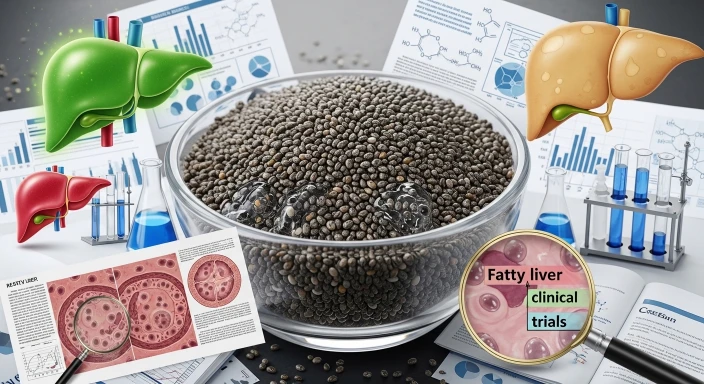
7. Liver support: As documented in the chia seeds for liver health research, chia’s ALA and polyphenols upregulate PPAR-alpha in the liver, supporting hepatic fat oxidation. Daily chia water contributes to this mechanism continuously.
Common Mistakes — Why Chia Water Does Not Work for Some People
Mistake 1: Not soaking long enough. Two-minute soaking produces a partially hydrated gel that continues expanding rapidly in the esophagus and stomach. Minimum 15 minutes. Ideal 20-30 minutes.
Mistake 2: Starting with two tablespoons immediately. If your current fibre intake is low (under 15g/day, which describes most adults), jumping to 10g of additional fibre in one drink causes bloating, gas, and cramping. Start with one teaspoon for week one, one tablespoon for week two, and build to two tablespoons by week three.
Mistake 3: Not drinking enough water with it. Fibre requires water to function. The additional 200ml after the drink is not optional for people with constipation. A total daily water intake of 2 to 2.5 litres is essential when significantly increasing fibre consumption.
Mistake 4: Expecting detox effects. When people expect detox and experience improved digestion instead, they often conclude the drink “didn’t work” because their misaligned expectation was not met. The drink works for what it actually does.
Mistake 5: Drinking it alongside low water intake for the rest of the day. Consuming chia water consumed as an isolated habit while the rest of the day involves minimal hydration and low fibre from food will produce inconsistent results. It works best as part of an overall dietary fibre and hydration pattern.
Mistake 6: Using the wrong seeds. Whole chia seeds (black or white — nutritionally equivalent) are correct. Chia flour will not form the same gel structure. Chia oil will not produce any fibre benefit.
Real People, Real Results — Three Case Studies
Case Study 1: Priya, 31 — Chronic constipation and afternoon bloating
Priya had experienced constipation, averaging three bowel movements per week, for most of her adult life. She ate approximately 12g of fibre daily. She began with one teaspoon of soaked chia seeds in 300ml of water with lemon every morning, building to two tablespoons over four weeks.
By week six, daily bowel movements had become consistent. Afternoon bloating had reduced significantly. She noted improved energy levels — likely related to the blood sugar stabilisation effect of morning chia water before her typically high-carbohydrate breakfast.
Her GP confirmed at her next review that her fibre intake had more than doubled. The GP attributed the bowel improvements directly to the fibre increase. Whether it was specifically the chia water versus the act of intentionally increasing fibre is impossible to isolate — but the result was real.
Case Study 2: Marcus, 44 — IBS-C and weight management
Marcus had IBS-C (constipation-predominant irritable bowel syndrome) and had tried psyllium husk capsules previously with moderate success. He switched to chia water because the ritual of preparing it felt more sustainable.
He built from one teaspoon to 1.5 tablespoons over six weeks — never quite reaching the standard two-tablespoon dose because of mild bloating at higher amounts. At 1.5 tablespoons daily, he found a sweet spot: improved regularity, reduced cramping compared to his IBS baseline, and a 2.3kg weight reduction over 12 weeks, attributed partly to reduced appetite from the pre-breakfast drink.
He continues at 1.5 tablespoons, 15 minutes of soaking, with fresh ginger added — which he reports significantly reduces his IBS cramping compared to lemon alone.
Case Study 3: Elena, 58 — Postmenopausal digestive slowdown
Elena’s gastric transit time had slowed progressively since menopause — a common and under-discussed phenomenon driven by declining estrogen’s effect on intestinal motility. She was averaging two bowel movements per week. Her diet was nutritionally good, but her total fibre intake was around 18g daily.
She added two tablespoons of chia water every morning, warm (not cold — she found cold water exacerbated her digestion). Within four weeks, regularity had improved to four to five times weekly. Her nutritionist noted the magnesium in chia seeds (95mg per ounce, 23% DV) may have contributed alongside the fibre — magnesium has documented effects on intestinal muscle contraction.
She specifically appreciated that the same drink was supporting her bone health and hormonal balance (see chia seeds benefits for women guide) simultaneously — three problems, one morning drink.
Chia Seed Water Internal Shower — 8 FAQ
1. How long does it take for the internal shower to work?
Dr. Karan Rajan, the UK surgeon who reviewed this trend publicly, stated effects are “not immediate” and typically take 12 to 24 hours. The gel needs time to travel from your stomach through the small intestine to the large intestine, where bowel movements are initiated. Drink it in the morning and expect results by mid-afternoon to the following morning. Do not consume more because you do not feel immediate results — that is how bloating and cramping happen.
2. Should I drink chia water every day?
Yes, for most healthy adults, daily chia water consumption is safe and beneficial. The fibre, prebiotic, and mineral contributions accumulate over time. The gut microbiome benefits specifically require consistent feeding to develop. Occasional use for acute constipation is useful, but daily use delivers the broader benefits documented throughout this guide.
3. How many chia seeds should I put in my internal shower drink?
Start with one teaspoon if you are new to chia seeds or have a currently low-fibre diet. Build to one tablespoon after one week. The standard recommendation of two tablespoons is appropriate for adults who already eat a reasonable amount of fibre. Two tablespoons deliver 10g of fibre — approximately 35% of daily adult requirements in one drink. More than two tablespoons offers diminishing returns and increased bloating risk.
4. Does chia water help with weight loss?
It supports weight management through three mechanisms: gel-volume satiety that reduces subsequent meal intake, blood sugar stabilisation that reduces cravings and insulin spikes, and gut microbiome support that influences the bacteria known to affect fat storage and metabolism. It is not a fat-burning drink. The chia seeds for weight loss page covers the specific evidence, timing, and realistic expectations in full detail.
5. Can I drink chia water if I have IBS?
IBS-C (constipation-predominant): generally beneficial with a gradual introduction starting at one teaspoon. Build slowly over 4 to 6 weeks. IBS-D (diarrhoea-predominant): approach with significant caution — adding bulk fibre to already rapid transit can worsen symptoms. IBS-M (mixed): individual response varies considerably. Start very low and monitor. Always consult your gastroenterologist before adding significant fibre if you have been diagnosed with IBS.
6. Does the type of water matter — should I use warm or cold water?
No significant evidence supports one temperature over the other for fibre function. The gel forms equally well in cold, room-temperature, or warm water. Some people with cold-sensitive digestion (common in people with IBS and certain Asian populations where cold beverages are traditionally avoided) find warm water easier to tolerate. Warm water may also have a mild independent peristaltic effect. Choose what you will actually drink consistently.
7. Can chia water replace drinking plain water for hydration?
No — chia water supplements hydration, but does not replace plain water intake. The gel retains water and releases it gradually, which extends effective hydration. But your total daily fluid intake should still include 1.5 to 2 litres of additional plain water. Chia water counts toward total daily fluid intake (approximately 400 to 500ml per serving) but is not a substitute for overall adequate hydration.
8. Is there anyone who absolutely should not drink chia water?
Anyone with a history of esophageal stricture, esophageal dysmotility, achalasia, or any swallowing disorder should not drink chia water without medical clearance — the soaked seeds are safer than dry, but the expansion risk remains. Anyone with a documented history of intestinal obstruction requires a gastroenterologist’s approval. Anyone on prescribed bowel-motility medications should discuss fibre additions with their prescribing doctor, as increased dietary fibre can interact with medication timing and effect.
The Bottom Line — Should You Try the Internal Shower Drink
Three years after it went viral. Still trending. Mainstream doctors are now weighing in. The evidence has had time to settle.
Here is the honest verdict: chia seed water is one of the most practical, lowest-cost, broadest-benefit morning habits available. Two tablespoons. 400ml of water. 15 minutes of soaking. The cost is approximately $0.30. The fibre contribution covers approximately 35% of your daily requirement. The micronutrients are real. The gut microbiome benefit develops over weeks. The constipation relief is consistent with the physiology.
It is not a detox. It is not a cleanse. It is not a shower. It is a dietary fibre in liquid form, consumed in a way that maximises its functional properties before it enters your body.
The TikTok framing was imprecise. The mechanism is solid. The safety concerns are real and specific — but affect a minority of people with pre-existing conditions, not healthy adults following the correct soaking protocol.
Start with one teaspoon. Soak it properly. Drink it with an extra glass of water. Build gradually. Be consistent for four weeks before evaluating whether it is working.
That is the unsexy version of the internal shower story. It is also the version that actually produces results.
What is your current fibre intake per day — and does chia water fill a gap in your diet, or would you be better served by addressing the rest of your dietary fibre first?