How to Eat Chia Seeds: Soaked vs Raw — What the Science Actually Says (2026)
Here is the question that splits the chia seeds community in half: Do you actually need to soak them?
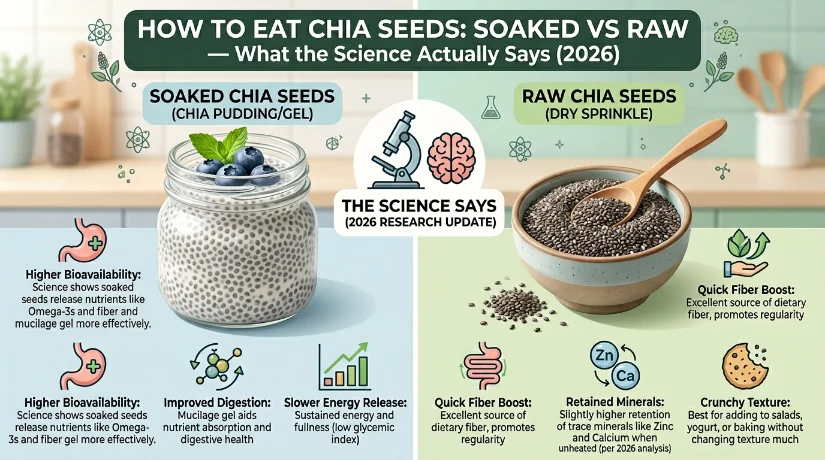
One camp says raw chia seeds are perfectly fine. The other insists soaking is mandatory for nutrient absorption. Both camps are partially right. Both are missing the most interesting finding in the research — that ground chia seeds absorb more antioxidants than either soaked or whole seeds.
The honest answer is not simply “soak them.” The honest answer depends on what you want from them.
- Maximum mineral absorption — soak them
- Maximum antioxidant absorption — grind them
- Best constipation and gut relief — soak them in water first
- Convenience with adequate liquid — raw is fine for most healthy adults
This article covers all five preparation methods — raw, soaked, ground, sprouted, and baked — with the actual science behind each one. Including the EFSA safety ruling that competitor articles completely missed, and the phytic acid research that most wellness blogs get embarrassingly wrong.
The Biology First: What Is Actually Inside a Chia Seed
Before comparing preparation methods, you need to understand the structure you are working with.
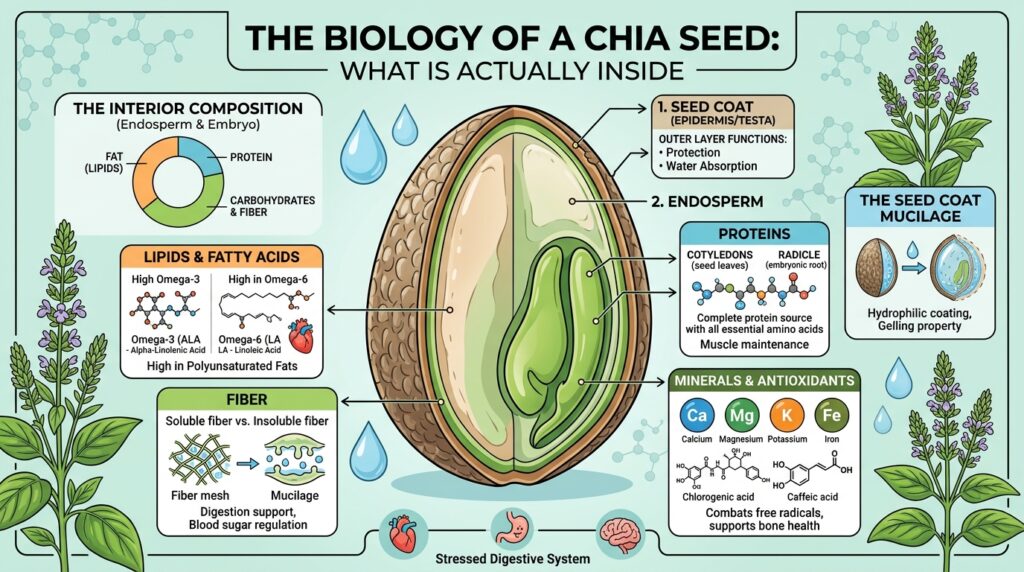
A chia seed has three components that matter for nutrition:
- The testa (seed coat): the outer layer where mucilage — the soluble fibre gel — is stored. Phytic acid and enzyme inhibitors are concentrated here.
- The endosperm: the starchy interior containing carbohydrates, protein, and most of the fat including ALA omega-3.
- The germ: the embryonic plant tissue rich in antioxidants — chlorogenic acid, caffeic acid, quercetin, and kaempferol.
Different preparation methods affect these three components differently. That is why no single “best” method exists — it depends entirely on which nutritional benefit you are prioritising.
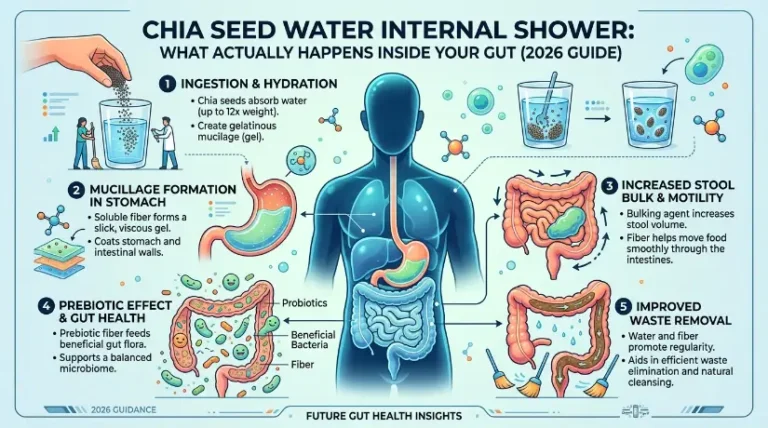
Chia seeds absorb approximately 10 to 15 times their weight in water. Two tablespoons (20g dry) absorb 200 to 300ml of liquid. This happens because the testa contains mucilage — a complex polysaccharide that hydrates into a transparent gel. The gel is not just texture. It fundamentally changes how your digestive system interacts with every nutrient in the seed.
The Phytic Acid Question — What Competitor Articles Get Wrong
Every article on soaking chia seeds mentions phytic acid. Almost none explain it accurately.
What phytic acid actually is: an organic acid found in the outer layers of seeds, grains, and legumes. It binds to divalent minerals — calcium, magnesium, iron, zinc — and forms complexes that reduce absorption in the gut. A real concern in populations whose entire diet is plant-based and phytate-heavy.
What the research says about chia specifically: a PMC 2023 study measured phytate values in chia seeds between 1.55 and 2.65g per 100g depending on geographic origin. The EFSA NDA Panel reviewed this data and concluded: “The content of phytates in chia seeds is comparable to the contents in cereal grains and does not raise a safety concern.”
This is the finding no competitor article cites. The European Food Safety Authority reviewed chia phytate levels and explicitly cleared them as not a safety concern. The phytic acid in chia seeds is not dramatically higher than the wheat bread or oatmeal most people eat at the same meal.
Soaking reduces phytic acid by approximately 25% — USDA National Nutrient Database analysis. That reduction matters most for people whose diets are already high in phytate-rich foods. It is less critical for people eating varied diets with animal protein, since animal protein contains no phytate and improves overall mineral absorption.
Practical implication: if you are vegan or vegetarian and chia seeds are one of your primary mineral sources, soaking is worth doing. If you eat a mixed diet, the phytate concern from chia seeds specifically is minimal regardless of preparation method.
Soaked Chia Seeds: Every Confirmed Benefit and Every Honest Limitation
Soaking is the method with the broadest evidence base. Here is exactly what changes.
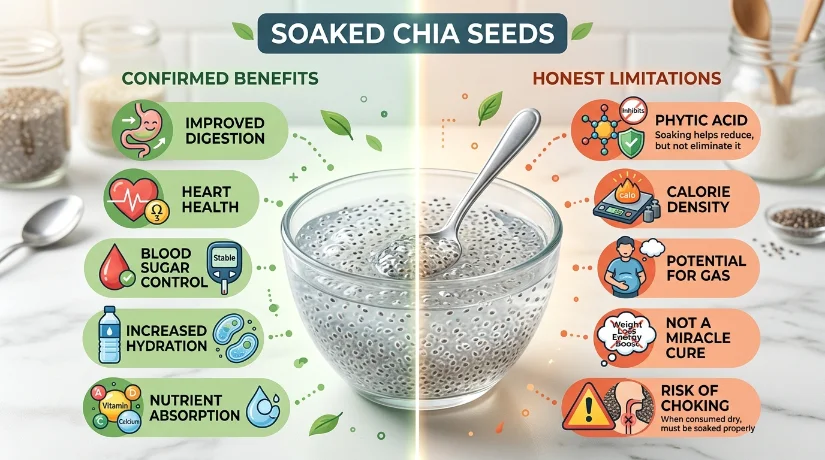
What soaking confirms — the science
- Phytic acid reduction: approximately 25% reduction in phytate content, improving calcium, magnesium, iron, and zinc absorption from the seeds and from foods eaten at the same meal
- Enzyme inhibitor deactivation: soaking activates phytase — the endogenous enzyme that breaks down phytic acid — and deactivates trypsin inhibitors that interfere with protein digestion
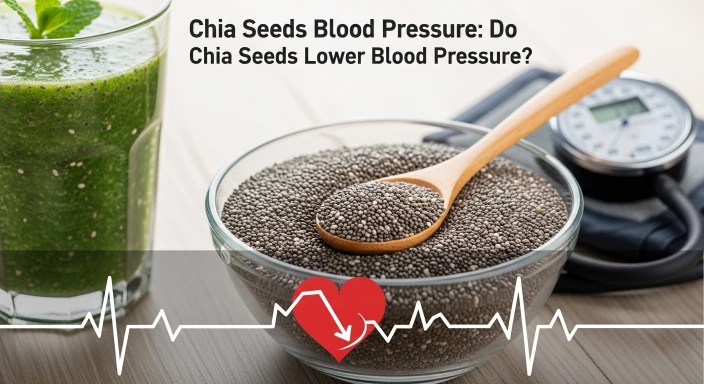
- ACE inhibitor release: this is the finding almost no competitor covers. Soaking releases natural ACE (angiotensin-converting enzyme) inhibitors from chia seeds — the same class of compounds used pharmaceutically to treat high blood pressure. Natural food-derived ACE inhibitors have a weaker but real effect on blood pressure regulation, consistent with the cardiovascular data in the full chia seed benefits guide
- Mucilage gel pre-formation: the gel forms outside the body rather than in the esophagus — the critical safety step that prevents the rapid expansion risk documented in the Poison Control case study covered in the chia seed water guide
- Improved digestibility: pre-hydrated gel is gentler on sensitive digestive systems. Harvard Medical School specifically cites this as the primary safety benefit for people with existing GI issues
- Sustained hydration: gel matrix releases water gradually during digestion, extending effective hydration beyond plain water
What soaking does NOT do — the honest limitations
- Does not increase total nutrient content — omega-3, protein, calcium, and fibre values are identical before and after soaking
- Does not dramatically improve ALA omega-3 absorption in people with adequate gut enzyme function
- Does not eliminate all antinutrients — reduces phytic acid by approximately 25%, not completely
- Does not improve antioxidant absorption as well as grinding — the key finding explored in the next section
The correct soaking method — step by step
- Measure 1 to 2 tablespoons of whole chia seeds into a glass or jar
- Add 150ml to 250ml of liquid per tablespoon — water, milk, plant milk, or juice
- Stir vigorously for 30 seconds to prevent clumping
- Rest for minimum 15 minutes. Optimal: 20 to 30 minutes for full phytate reduction
- Stir again before consuming
- Drink immediately or refrigerate for up to 5 days
The 1:9 seed-to-water ratio validated by Journal of Food Science research creates optimal gel consistency for maximum nutritional benefit. For chia pudding, use 1:6 ratio. For the internal shower drink, use 1:15 ratio for drinkable consistency — full protocol in the chia seed water guide.
Raw Chia Seeds: When They Work and When They Do Not
Eating chia seeds raw — dry, whole, without soaking — is nutritionally valid for most healthy adults. The question is not whether raw seeds are dangerous. The question is whether they are optimal.
What raw chia seeds provide:
- Identical total nutrient content to soaked — same omega-3, protein, fibre, calcium, magnesium
- Zero preparation time — convenient for yogurt, smoothies, oatmeal, salads
- Fine for baking applications where soaking would change the texture
- Suitable for any food where surrounding liquid begins gel formation during eating or digestion
The three genuine limitations:
- Higher phytate activity — minerals are somewhat less bioavailable, though EFSA considers total chia phytate levels non-hazardous
- Enzyme inhibitors remain active — may mildly impair protein digestion efficiency
- Mucilage expands in the digestive tract — creates higher hydration demand from the body and potential bloating if insufficient water is consumed
The choking risk: dry chia seeds consumed with insufficient liquid absorb fluid from the esophageal mucosa during swallowing, creating a rapidly expanding gel bolus. A 39-year-old man required emergency endoscopy after swallowing dry seeds with water. Always consume raw dry chia seeds with a full glass of liquid — never dry without fluid. This is the single genuine safety concern with raw consumption.
Who can eat raw chia seeds safely:
Healthy adults can eat them mixed into food or drinks with adequate liquid. Anyone adding them to smoothies, yogurt, oatmeal, salads, or bread with 300ml or more of fluid at the same time.
Who should always soak first:
Anyone with swallowing difficulties, esophageal conditions, IBS, Crohn’s disease, or known digestive sensitivity. Children under 12. The elderly. Anyone prone to bloating from high-fibre foods.
Ground Chia Seeds: The Surprising Winner for Antioxidant Absorption
Here is the finding that zero competitor articles properly explain.
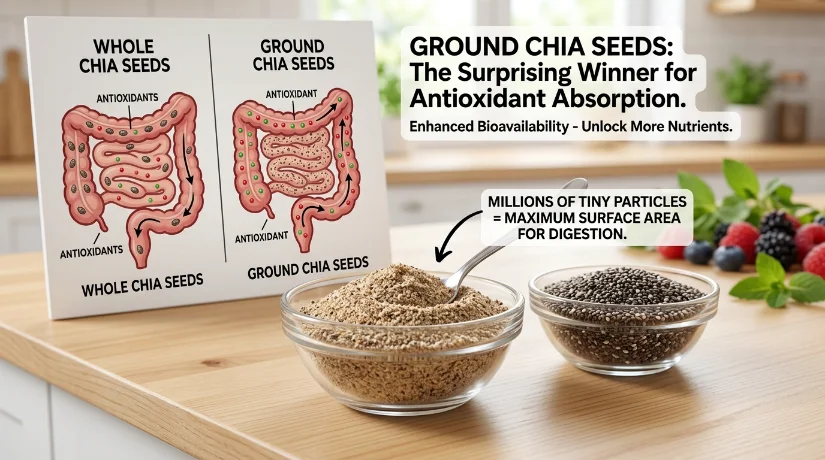
A peer-reviewed study found that ground chia seeds produced higher uptake of antioxidants and nutrients compared to whole seeds or soaked seeds. Grinding breaks open the testa — the seed coat — and releases antioxidant compounds (chlorogenic acid, caffeic acid, quercetin, kaempferol) directly into the digestive stream.
With whole or soaked seeds, the testa must be physically broken by chewing or digestive action. For people who do not chew thoroughly — which is most people eating seeds mixed into food — a meaningful portion of antioxidants passes through unabsorbed.
What grinding achieves:
- Maximum antioxidant bioavailability — polyphenols are released immediately on contact with digestive enzymes
- Faster ALA omega-3 release — the seed coat no longer acts as a barrier to fat absorption
- Same mucilage benefit as soaking — ground chia still forms gel when it contacts liquid in the stomach
- Phytic acid reduction comparable to soaking — grinding combined with liquid exposure activates phytase similarly
The critical limitation:
Ground chia seeds oxidise rapidly. ALA omega-3 — a highly polyunsaturated fat — is vulnerable to rancidity once the protective testa is broken. Grind only what you will use within 24 hours. Pre-ground commercial chia is often already oxidised before you consume it. Buy whole seeds and grind fresh.
Grind chia seeds in a coffee grinder or spice mill immediately before use. Add to smoothies, oatmeal, yogurt, or baked goods. Never pre-grind in bulk. This method is optimal for antioxidant and polyphenol absorption but requires 30 extra seconds of preparation daily.
Sprouted Chia Seeds: Maximum Nutrition But Maximum Effort
Sprouting — allowing seeds to germinate — delivers the most nutritionally complete preparation but requires 48 to 72 hours and active management.
What sprouting achieves:
- Phytic acid reduction greater than soaking — germination activates phytase more comprehensively than water soaking alone
- Increased protein digestibility — protease enzyme activity during germination partially pre-digests proteins
- Increased vitamin C content — sprouting generates ascorbic acid as part of germination metabolism
- Reduced trypsin inhibitor activity — enzyme inhibitors were significantly reduced during germination
The practical problems:
- Chia seeds do not sprout as easily as other seeds — their mucilage creates a gel that can prevent proper germination if not managed carefully
- Requires 2 to 3 days of moisture management — practical for enthusiasts, not a daily routine
- Antioxidant absorption is lower than in ground seeds — testa remains intact through the sprouting process
- Microbial contamination risk increases in warm, moist sprouting conditions
Sprouted chia has real advantages. For daily practical use, the effort-to-benefit ratio favours soaked or ground for most people.
Baked Chia Seeds: What Cooking Actually Does to Their Nutrients
Chia seeds baked into bread, muffins, and energy bars are increasingly common. What happens to nutrition during cooking?
What baking fully preserves:
- Fibre content: both soluble and insoluble fibre survive heat completely — the primary digestive benefit is intact
- Mineral content: calcium, magnesium, phosphorus, zinc are heat-stable — baking does not reduce them
- Blood sugar benefit: research confirmed bread containing chia seeds produced lower post-meal blood glucose spikes versus regular bread — the fibre effect survives baking
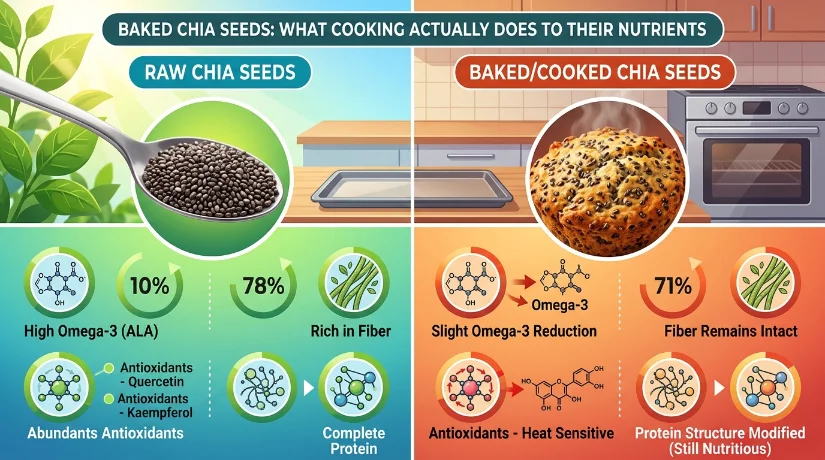
What baking reduces:
- ALA omega-3 stability: relatively heat-stable compared to EPA and DHA, but prolonged high-temperature baking above 180 degrees Celsius for extended periods causes some oxidative degradation. At normal baking temperatures for 20 to 30 minutes, ALA loss is modest
- Antioxidant activity: polyphenols (quercetin, chlorogenic acid) are partially degraded by heat — baked chia retains some but not all antioxidant activity
- Mucilage gel function: the digestive gel effect is significantly reduced in baked seeds
Baked chia delivers real fibre and mineral benefits. It does not deliver the same gel-matrix digestive effect as soaked seeds. Use baked chia for nutritional enrichment of everyday food, and soaked or ground chia for targeted benefits — blood sugar control, weight management, and gut health covered in the chia seeds for weight loss guide.
The Complete 5-Method Comparison — Every Factor Side by Side
| Forms in the gut | Raw | Soaked | Ground | Sprouted | Baked |
| Phytic acid | Highest | Reduced ~25% | Reduced ~25% | Lowest | Unchanged |
| Antioxidant absorption | Moderate | Moderate | Highest | Moderate | Reduced |
| ALA omega-3 | Good | Good | Best (barrier removed) | Good | Slightly reduced |
| Mineral absorption | Moderate | Best | Good | Best | Good |
| Digestibility | Variable | Best | Very good | Very good | Good |
| Gel / satiety effect | Forms in gut | Pre-formed — safest | Forms fast in gut | Forms in gut | Minimal |
| Choking risk | Present if dry | Eliminated | Low | Low | None |
| Prep time | Zero | 15-30 min | 1-2 min | 48-72 hours | Per recipe |
| Oxidation risk | None | None | High — use immediately | Low | Some |
| Best use case | Food with ample liquid | Digestion, minerals, constipation | Antioxidants, smoothies | Maximum nutrition | Baked goods |
Which Method Is Best for Your Specific Goal
Constipation relief and gut health
Soaked chia seeds in water — the internal shower method. Pre-formed gel is the most effective for constipation relief and intestinal lubrication. See the complete chia seed water guide for the exact soaking ratio, timing, safety protocol, and the Poison Control case study explained properly.
Maximum antioxidant and omega-3 absorption
Ground chia seeds are added to smoothies, oatmeal, or yogurt immediately after grinding. Grind fresh daily. Never store pre-ground seeds at room temperature for more than 24 hours.
Blood sugar control and weight management
Soaked chia seeds are consumed 15 to 20 minutes before meals. The gel matrix reduces postprandial glucose spikes and increases satiety hormone release before eating. This is the primary mechanism behind chia seeds for weight loss — the pre-meal fibre load reduces total daily energy intake without restriction-based hunger.
Daily convenience — no preparation time
Raw chia seeds added to yogurt, smoothies, oatmeal, or any food containing sufficient liquid. Ensure 250ml or more of liquid with every serving. Not optimal for every benefit — but the best method for people who will not consistently soak seeds is always the method they will actually maintain every day.
Everyday nutrition through baked food
Baked into bread, muffins, energy bars, or granola. Delivers fibre, mineral, and blood sugar benefits in a convenient format. Reduced antioxidant and gel benefits versus soaked or ground — but a genuinely useful nutritional addition to whole-grain baked goods.
Maximum mineral absorption — calcium, magnesium, zinc, iron
Soaked or sprouted seeds. Phytic acid reduction in both methods improves mineral bioavailability. Most relevant for vegans and vegetarians whose overall diets are higher in phytate-containing foods. For the full calcium comparison with dairy, see the chia seed benefits guide.
How Long to Soak Chia Seeds — The Timing Science
| Soak time | What happens | Best for |
| 0 min (dry) | No gel, no phytate reduction, enzyme inhibitors active | Adding to food with ample liquid |
| 5 minutes | Partial gel, minimal phytate reduction | Quick addition to smoothies |
| 15 minutes | Full gel formed, significant phytate reduction begins | Minimum for digestive benefit |
| 20-30 minutes | Optimal gel, maximum phytate reduction, ACE inhibitor release | Internal shower, gut health, minerals |
| Overnight (8 hrs) | Full gel, maximum phytate reduction, ideal pudding texture | Chia pudding, meal prep, constipation |
| 48-72 hours | Germination — maximum phytate reduction, vitamin C increases | Enthusiasts, maximum nutrition |
The 1:9 seed-to-liquid ratio creates optimal gel for both texture and nutritional benefit. For digestive applications, 20 minutes delivers both full gel formation and meaningful phytate reduction simultaneously.
Black vs White Chia Seeds — Does Colour Change Anything
One of the most consistently misinformed sub-questions on this topic.
Black and white chia seeds are the same species — Salvia hispanica. PMC studies confirmed comparable nutritional profiles for both. White Bolivian chia showed the lowest phytate values at 1.55g per 100g. Dark Chilean and Bolivian chia showed the highest at 2.63 to 2.65g per 100g.
The practical difference is negligible for most people. Soaking and preparation guidance are identical for both colours. Choose whichever is available and affordable. The processing method matters far more than seed colour.
Does Soaking Actually Make a Measurable Difference — The Honest Answer
This is the question most people really want answered: Is the difference between soaked and raw meaningful enough to bother with?
For most healthy adults, eating a varied diet:
The difference is real but modest. The 25% phytic acid reduction improves mineral absorption — but if you eat meat, fish, or dairy at other meals, your overall mineral absorption is already well-supported. The enzyme inhibitor reduction is a genuine digestive benefit. The choking hazard elimination is the most practically significant safety argument for soaking.
For vegans, vegetarians, and people with digestive sensitivity:
The difference is meaningful. When chia seeds are one of your primary mineral sources and phytate reduction matters for daily mineral intake across your whole diet, soaking provides real cumulative benefit. Improved digestibility matters more for people with existing gut issues.
The honest bottom line: soaking is better than raw for most nutritional goals. The improvement is incremental, not transformative. The most important variable is not whether you soak — it is whether you eat chia seeds consistently at all. Two tablespoons of raw chia seeds every single day will outperform perfectly soaked chia seeds eaten three times a week.
Consistency beats method. Every time.
Common Mistakes — Any Preparation Method
Mistake 1: Starting with two tablespoons immediately.
Ten grams of additional fibre from two tablespoons is a large addition if your baseline is low. Start with one teaspoon, build to one tablespoon after one week, reach two tablespoons by week three. Jumping straight to full dose causes bloating, gas, and cramping — the most common reason people quit.
Mistake 2: Not drinking enough water.
Every tablespoon of chia seeds requires an additional 200ml of fluid to function properly. Two tablespoons needs an extra 400ml beyond your normal intake. Fibre without water worsens constipation rather than relieving it.
Mistake 3: Pre-grinding in bulk.
Ground chia seeds oxidise rapidly. ALA omega-3 becomes rancid within days at room temperature. Grind only what you need for that day. Refrigerate if grinding more than one serving slightly.
Mistake 4: Adding chia to very hot liquid and expecting gel.
High heat slightly denatures mucilage. Add soaked or raw chia to food after it cools below 60 degrees Celsius. Hot oatmeal: let it cool for 2 minutes before adding seeds.
Mistake 5: Expecting overnight results.
Gut microbiome benefits from chia’s prebiotic fibre develop over weeks. Blood sugar stabilisation begins immediately. Constipation relief typically occurs within 12 to 24 hours. For chia seeds’ brain health benefits — operating through the gut-brain axis — 4 to 8 weeks of consistent daily use is the minimum timeframe.
Real Case Studies — Same Seeds, Different Preparation, Different Results
Case Study 1: Tom, 38 — Switched from raw to soaked
Tom had been adding two tablespoons of dry chia seeds to his morning smoothie for six months. He blended immediately after adding dry seeds, under 30 seconds, insufficient for gel formation. Seeds were passing through largely intact. He reported no digestive improvement despite significant fibre addition.
His nutritionist recommended soaking seeds for 20 minutes in water before adding them to the smoothie. Within two weeks: daily bowel regularity achieved. The gel had been forming insufficiently in the blender rather than pre-forming outside the body, delivering only a partial bulk effect in the colon.
Case Study 2: Aisha, 29 — Ground seeds for athletic recovery
Aisha runs distance and had been eating whole chia seeds in pre-run oatmeal for three months with minimal effect on recovery. Her sports nutritionist suggested freshly ground seeds — two tablespoons, ground each morning in a coffee grinder.
After six weeks: reduced muscle soreness. Her CRP (C-reactive protein, inflammation marker) measured at 12 weeks had reduced from 1.8 to 0.9 mg/L — within the range her physician considered consistent with improved omega-3 anti-inflammatory status. She cannot isolate the chia preparation change from other variables, but antioxidant and ALA bioavailability are the most likely contributors.
Case Study 3: Wei, 52 — Vegan, bone density concern
Wei had been vegan for 11 years. A DEXA scan showed bone density in the low-normal range. She was already eating two tablespoons of raw chia seeds daily, sprinkled on meals. Her nutritionist recommended switching to soaked seeds to reduce phytic acid and improve calcium and magnesium absorption, combined with vitamin D correction.
After 6 months: repeat DEXA showed bone density stabilised. Her dietitian attributed stabilisation to the combination of improved mineral absorption from soaking and vitamin D correction. The mineral absorption improvement from soaking — while modest in isolation — was cumulative across daily consistent use over six months.
How to Eat Chia Seeds — 8 FAQ
1. Do you have to soak chia seeds before eating?
No — raw chia seeds are safe for healthy adults when consumed with adequate liquid. Soaking is recommended for better mineral absorption (25% phytic acid reduction), improved digestibility, and elimination of the choking risk associated with dry seeds expanding in the esophagus. For maximum benefit across most nutritional goals, soaking 20 to 30 minutes is the preferred method.
2. How long should you soak chia seeds?
Minimum 15 minutes for basic gel formation. Optimal 20 to 30 minutes for full phytic acid reduction and ACE inhibitor release. Overnight for chia pudding texture and maximum digestive benefit. Use the 1:9 seed-to-liquid ratio validated by Journal of Food Science research.
3. Are ground chia seeds better than whole?
For antioxidant absorption: yes — ground seeds release polyphenols more efficiently without the testa barrier. For omega-3 absorption: yes — ALA is more immediately bioavailable. The key limitation: ground seeds oxidise rapidly. Grind fresh and use within 24 hours. For fibre and mineral benefits: ground and whole are comparable.
4. Can you eat chia seeds raw in smoothies?
Yes — blending with liquid initiates gel formation. The gel may not form as completely as pre-soaked seeds if blending time is short. For best results: soak 15 minutes before adding, or blend for at least 60 seconds. Always include minimum 300ml of liquid in the smoothie.
5. Do chia seeds lose nutrients when baked?
Fibre and minerals survive baking completely. Protein is largely preserved. ALA omega-3 is relatively heat-stable at normal baking temperatures but suffers some degradation at prolonged high heat. Polyphenols are partially degraded by heat. Blood sugar benefit from baked chia seeds has been confirmed — bread with chia produces lower post-meal glucose spikes than regular bread.
6. How much water should I drink when eating chia seeds?
Each tablespoon requires approximately 150 to 200ml of additional fluid. Two tablespoons needs 300 to 400ml additional fluid beyond normal intake. The most common cause of chia seed digestive discomfort is insufficient liquid — not the seeds themselves.
7. What is the best time to eat chia seeds?
Morning before breakfast: optimal for blood sugar stabilisation and daily fibre contribution. Before meals: optimal for the satiety effect that supports chia seeds for weight loss — the pre-meal gel reduces postprandial glucose and caloric intake at the following meal. Evening: optimal for constipation relief by the following morning. There is no wrong time. Consistency matters more than timing.
8. How much chia seeds per day?
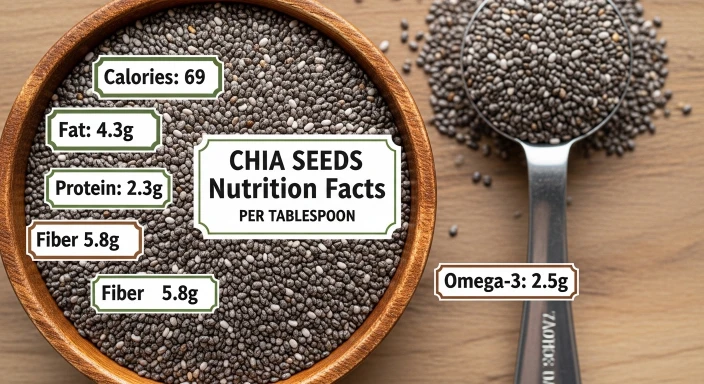
The EFSA NDA Panel recommends a maximum of 15g per day as a novel food additive. Practical research uses 1 to 2 tablespoons (14 to 28g) daily with documented benefits. Start with one teaspoon and build gradually over three to four weeks. Two tablespoons provides approximately 10g of fibre — 35 to 40% of adult daily requirements in one serving.
The Bottom Line — Which Method Should You Choose
Five methods. One seed. The right answer depends on what you need.
- Soak for: better mineral absorption, best gut health and constipation benefit, safest preparation for digestive sensitivity, and the full internal shower gel effect
- Grind for: maximum antioxidant and omega-3 absorption — if you will grind fresh daily
- Eat raw for: convenience when consuming with adequate liquid every time
- Bake for: consistent daily nutrition added to everyday food without any preparation
- Sprout for: maximum nutritional completeness with 48 to 72 hours of preparation investment
What most people should actually do: soak two tablespoons in water or plant milk every morning for 20 minutes. It takes 90 seconds of active effort. It delivers better mineral absorption, better digestive function, eliminated choking risk, and the ACE inhibitor cardiovascular benefit that raw seeds do not provide.
That 90-second daily habit — sustained consistently for eight weeks — produces measurable changes in gut health, blood sugar, and mineral status. For the complete picture of what chia seeds deliver once properly absorbed, the full chia seed benefits guide covers all 15 peer-reviewed mechanisms in detail.