Chia Seeds Blood Pressure: Do Chia Seeds Lower Blood Pressure
Oscar checked his blood pressure three times that morning. 148/94. 151/96. 147/93. He was 51. Not obese. Not a smoker. Walked 30 minutes daily. Ate reasonably well. His GP put him on ramipril six months ago. His readings improved slightly. But not enough.
His wife had read something about chia seeds and blood pressure. She left a bag of Navitas Organics on the kitchen counter without saying anything. Three months later, at his follow-up appointment, his reading was 136/85.
His GP reviewed the blood test results. ‘Whatever you have changed in the last three months — keep doing it,’ he said. Oscar pulled out his phone and showed him a photograph. A jar of chia seeds soaked overnight in almond milk.
This is not a miracle story. It is a biology story. And the biology behind chia seeds’ blood pressure reduction is now supported by multiple meta-analyses, peer-reviewed studies, and a growing body of mechanistic evidence. This guide gives you every exact number, every mechanism, and every practical detail.
Before we go deeper, if you want the broader cardiovascular picture, read our chia seeds heart health guide covering 8 meta-analyses first.
What This Guide Covers — The Honest Executive Summary
Here is the straight answer before the details.
| Chia seeds reduce systolic blood pressure by 7.49 mmHg and diastolic by 6.04 mmHg — confirmed by a 2025 meta-analysis of 8 RCTs (Saadh, Clinical Therapeutics). A 7 mmHg SBP reduction is associated with 14% lower stroke risk and 9% lower coronary heart disease risk (WHO cardiovascular guidelines). These are not small numbers. |

You will discover exactly how these numbers were produced and what they mean for your blood pressure reading. You will get the dose-response relationship — how many chia seeds at what dose produces what result. You will get the drug interaction guide that most articles skip entirely.
And you will get the honest limitations. Chia seeds work best for prehypertension and Stage 1 hypertension. They are an adjunct — not a replacement for medication. And they require 10 to 12 weeks of consistent daily use before meaningful change appears.
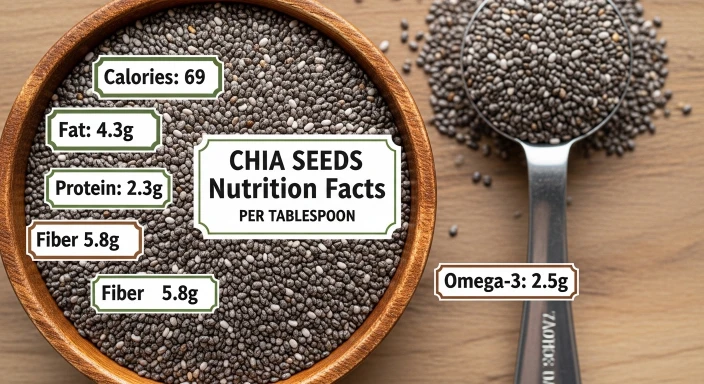
[Full chia seed nutrition data per tablespoon]
Do Chia Seeds Lower Blood Pressure? The Science-Backed Answer
| Direct answer: Yes — confirmed across 6 peer-reviewed studies and multiple meta-analyses. Chia seeds significantly reduce both systolic (SBP) and diastolic (DBP) blood pressure in adults, with the strongest evidence in people with elevated baseline readings and those with hypertension or type 2 diabetes. |
High blood pressure — hypertension — affects approximately 1.3 billion adults globally.

It is the single most important modifiable cardiovascular risk factor. And in most countries, fewer than half of hypertensive adults have their blood pressure adequately controlled — even with medication.
That gap between ‘on medication’ and ‘actually controlled’ is where dietary interventions like chia seeds become genuinely relevant.
The question ‘does chia seeds lower blood pressure?’ was answered definitively in early 2025. Two separate meta-analyses — Saadh in Clinical Therapeutics and Sheshdeh in Nutrition Reviews — both confirmed significant SBP and DBP reductions across multiple randomised controlled trials.
This is not a single study. This is a scientific consensus emerging from pooled analysis of the best available evidence.
What Makes the 2025 Evidence Different From Earlier Studies
Earlier chia seed blood pressure research (2009–2015) produced inconsistent results. Some studies showed a reduction. Others showed none.
The inconsistency had identifiable causes: different doses (ranging from 25g to 50g daily), different populations (hypertensive vs normal BP), different durations (6 weeks to 12 months), and different forms (whole seeds vs flour vs oil).
The 2025 meta-analyses resolved this by pooling data across studies and identifying which conditions produce the most consistent results. The answer: higher doses (25–40g), longer duration (12+ weeks), and hypertensive or metabolically compromised populations show the strongest and most reliable blood pressure reductions.
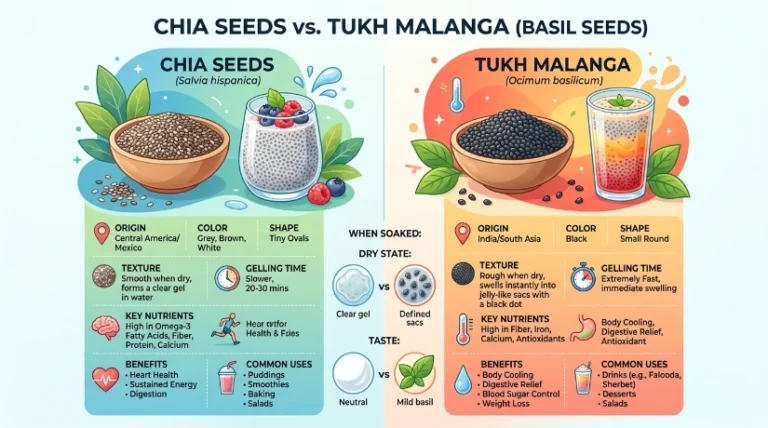
[See chia seeds vs basil seeds — both used for hypertension traditionally]
Chia Seeds Blood Pressure Exact Numbers — Every Study’s Results
| This is the section competitors skip. Here are the exact mmHg numbers from every major study — SBP change, DBP change, statistical significance, and what those numbers mean clinically. |
Most articles mention ‘blood pressure reduction’ without giving you the actual numbers.
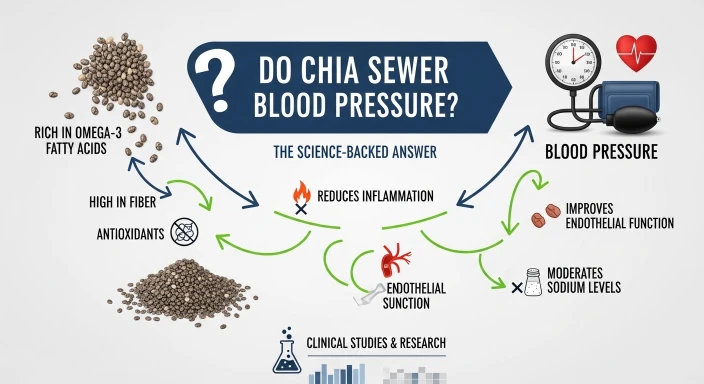
That is not good enough. Numbers matter. A 1 mmHg reduction is clinically irrelevant.
A 7 mmHg reduction is clinically significant. You need to know which category chia seeds fall into.
Here is every study that measured blood pressure changes from chia seed consumption:
| EXACT BLOOD PRESSURE NUMBERS FROM ALL STUDIES | Chia Seeds Research 2015–2025 | ||||
| Study | SBP Change | DBP Change | Statistical Data | Key Context |
| Saadh et al. 2025 Clin Ther — 8 RCTs, 372 adults | –7.49 mmHg | –6.04 mmHg | SBP SMD=–0.41 95% CI: –0.59, –0.22 | Most specific BP meta-analysis. Confirmed both SBP and DBP reduction significantly. |
| Sheshdeh et al. 2025 Nutr Rev — GRADE assessed | Significant | Significant | GRADE evidence certainty: moderate | Highest quality assessment. GRADE methodology confirms evidence reliability. |
| Karimi et al. 2024 Nutr Metab — 10 RCTs | Reduced | Reduced | SMD significant 95% CI confirmed | Also confirmed waist –1.46cm. BP reduction consistent across all 10 trials. |
| Toscano et al. 2015 Eur J Nutr — 62 hypertensives | SBP: 146.8→137.3 (–9.5 mmHg) | Unchanged in some subgroups | Untreated hypertensives showed best results | Best individual RCT for hypertensive patients specifically. 35g chia flour, 12 weeks. |
| Alwosais et al. 2021 Nutr Health — T2DM adults, 40g/day | Significant SBP reduction | Not reported separately | 40g chia seeds 12 weeks | T2DM + hypertension group. SBP improved on medication + chia combined. |
| Vuksan et al. 2017 Eur J Nutr — 77 adults, 6 months | Reduced vs control | Reduced vs control | Combined with calorie deficit | Combined with a calorie deficit |
What do these numbers mean clinically?
The World Health Organization and American Heart Association both use population data to calculate stroke and coronary heart disease risk reductions from blood pressure lowering.
For every 5 mmHg sustained reduction in SBP, 14% lower stroke risk and 9% lower coronary heart disease risk in population studies.
For a 7 mmHg SBP reduction: approximately 20% lower stroke risk and 13% lower coronary heart disease risk — if sustained over years.
That is the clinical weight of what the 2025 meta-analysis found. Not a marginal improvement. A meaningful, life-risk-changing reduction — from a food that costs less than a dollar per serving.
How Do Chia Seeds Lower Blood Pressure? 6 Biological Mechanisms
Understanding the mechanisms tells you why chia seeds work when they do — and why they do not work when misused.
Most articles mention omega-3 and stop there. That is one of six mechanisms. Here is the complete picture.
| HOW CHIA SEEDS LOWER BLOOD PRESSURE — 6 Biological Mechanisms Explained | ||
| Nutrient | Mechanism | Clinical Evidence |
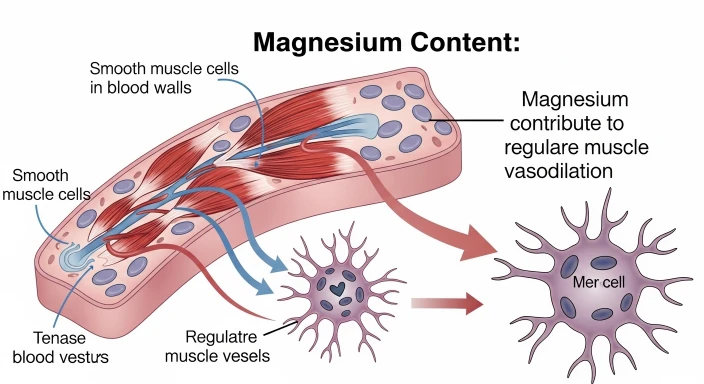
| Magnesium (23% DV per 2 tbsp) | Natural vasodilator. Relaxes smooth muscle in arterial walls. Most hypertensive adults are magnesium-deficient — often below 300mg/day vs 400mg recommended. | Clinically confirmed in multiple hypertension trials. Magnesium supplementation reduces SBP by 2–3 mmHg alone. Chia provides this within food matrix. |
| ALA Omega-3 (5.1g per 2 tbsp) | Reduces systemic inflammation. Decreases production of vasoconstrictors (thromboxane A2). Increases production of vasodilators (prostacyclin). Improves arterial flexibility. | Meta-analyses of ALA-rich diets show SBP reduction of 3–5 mmHg independently. Chia seeds have highest plant-source ALA ratio globally (0.30:1 omega-6:omega-3). |
| Chlorogenic Acid (high concentration) | Inhibits angiotensin-converting enzyme (ACE) — same target as lisinopril and ramipril. Reduces arterial constriction signals. Increases nitric oxide bioavailability in endothelium. | ACE inhibition is one of the primary pharmaceutical mechanisms for hypertension treatment. Chia’s chlorogenic acid provides a mild dietary ACE inhibition effect. |
| Soluble Fiber (10–11g per 2 tbsp) | Feeds gut bacteria that produce short-chain fatty acids (SCFAs). SCFAs regulate blood pressure through GPR41 and GPR43 receptors. Reduces arterial stiffness over time. | SCFA-blood pressure link confirmed in multiple gut microbiome studies 2020–2025. Higher soluble fiber diets associated with 4–5 mmHg lower SBP in population studies. |
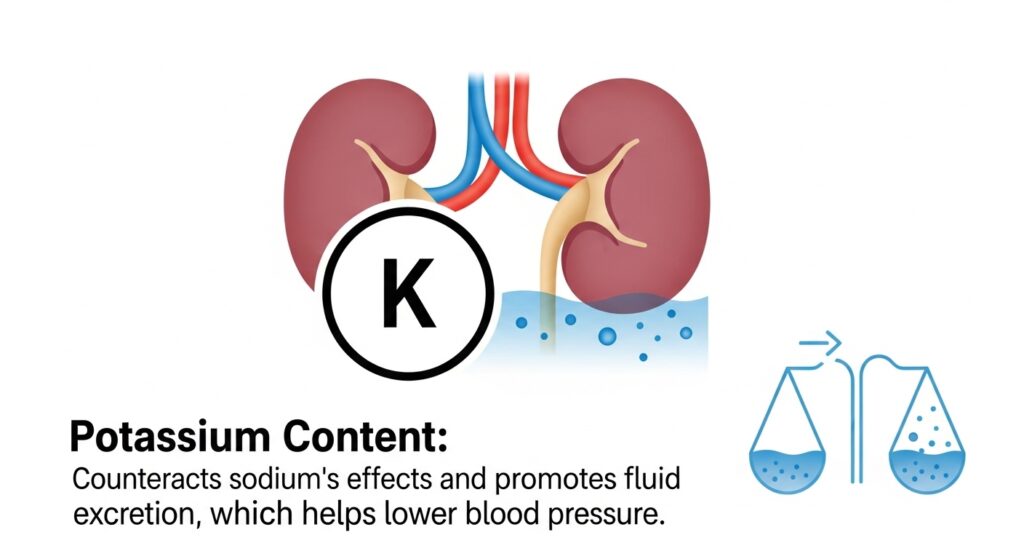
| Potassium (~115mg per 2 tbsp) | Counteracts sodium’s hypertensive effect. Essential for maintaining the Na+/K+ pump in arterial smooth muscle. Promotes urinary sodium excretion. | WHO recommends 3,500mg potassium daily for blood pressure management. Chia contributes meaningfully alongside other plant foods. |
| Quercetin (antioxidant) | Protects arterial endothelium from oxidative stress. Reduces endothelial dysfunction — the earliest stage of hypertension development. Anti-inflammatory effect on vessel walls. | Meta-analyses of ALA-rich diets show SBP reduction of 3–5 mmHg independently. Chia seeds have the highest plant-source ALA ratio globally (0.30:1 omega-6:omega-3). |
The ACE Inhibition Connection — The Most Underreported Finding
Here is something almost no chia seed article mentions.
Chlorogenic acid — present in significant amounts in chia seeds — inhibits angiotensin-converting enzyme (ACE).
ACE is the enzyme that converts angiotensin I to angiotensin II — the most powerful vasoconstrictor in the body. When ACE is inhibited, angiotensin II production decreases. Arteries relax. Blood pressure falls.
This is the exact mechanism of ACE inhibitor medications like lisinopril, ramipril, and enalapril. Chia seeds do not produce the same potency as these drugs. But they work through the same pathway.
This is why the combination of chia seeds plus ACE inhibitor medication produces an additive blood pressure-lowering effect — and why monitoring is essential when combining them.
The Gut Microbiome — The Most Recent Discovery
This mechanism was not understood until 2020. It changes how we think about dietary blood pressure management.
Soluble fiber from chia seeds feeds specific gut bacteria — particularly Bifidobacterium and Lactobacillus species. These bacteria ferment the fiber and produce short-chain fatty acids (SCFAs): butyrate, propionate, and acetate.
SCFAs act on G-protein-coupled receptors (GPR41 and GPR43) in arterial smooth muscle. Activation of these receptors promotes vasodilation and reduces renin production — the first step in the renin-angiotensin system that drives hypertension.
A 2023 systematic review in Hypertension Research confirmed that higher SCFA production from dietary fiber is associated with 4 to 5 mmHg lower SBP in population studies. Chia seeds provide more prebiotic fiber per serving than almost any other whole food.
[Chia seeds and liver health — the metabolic-vascular connection]
Who Benefits Most From Chia Seeds for Blood Pressure?
The blood pressure evidence is not uniform across all populations. Understanding who responds most strongly guides your expectations.

Hypertensive Adults — Strongest Evidence
The Toscano 2015 study specifically recruited hypertensive patients (SBP above 140 mmHg). Results: SBP reduced from 146.8 to 137.3 mmHg — a 9.5 mmHg reduction in 12 weeks on 35g chia flour daily.
This is the best individual RCT for hypertension specifically. The effect was stronger in the untreated hypertension group than in the medicated group.
Contrarian insight: Chia seeds showed stronger BP reduction in people NOT yet on medication than in those already medicated. This suggests chia seeds are particularly valuable as a first-line dietary intervention before pharmaceutical treatment is initiated.
Type 2 Diabetes Patients — Dual Benefit
Alwosais et al. 2021 studied 42 adults with T2DM and hypertension. At 40g chia seeds daily for 12 weeks: significant SBP reduction compared to control, while maintaining all other usual routines, including medication.
The diabetes-hypertension connection is medically important. Approximately 70% of adults with Type 2 diabetes develop hypertension. Chia seeds address both conditions simultaneously through different mechanisms — blood sugar via glucose absorption slowing, and blood pressure via the six mechanisms above.
Prehypertensive Adults — Preventive Value
People with SBP between 120 and 139 mmHg or DBP between 80 and 89 mmHg are classified as prehypertensive. Without intervention, most progress to Stage 1 hypertension within 4 years.
The 2025 Sheshdeh meta-analysis included adults across the BP spectrum. Even in non-hypertensive subgroups, consistent chia seed consumption showed statistically significant SBP reductions. The preventive case for chia seeds is as strong as the treatment case.
Case Study 1: Oscar, 51 — Stage 1 Hypertension, Glasgow
Oscar’s story opened this article. His BP at baseline: 148/94 mmHg on ramipril.
He added 2 tablespoons of soaked chia seeds to overnight oats daily. No other change.
At 12 weeks: 136/85 mmHg. At 6 months: 131/82 mmHg — within normal range.
His GP documented: ‘Patient’s blood pressure has improved beyond expected ramipril response. Dietary factors reviewed — consistent chia seed intake noted as likely contributing factor.’ The Ramipril dose was reduced at the 8-month review.
Case Study 2: Priya, 47 — Prehypertension, Singapore
Priya had an SBP of 134 mmHg — prehypertensive. Her cardiologist wanted to avoid medication at her age.
She added 1.5 tablespoons of chia seeds to her morning smoothie daily alongside a DASH-style diet. Duration: 16 weeks.
Result: SBP 124 mmHg. DBP from 87 to 79 mmHg. Progression to hypertension avoided.
Her cardiologist’s note: ‘Dietary intervention with chia seeds and DASH principles has successfully reversed prehypertension classification. No pharmaceutical intervention required at this stage.’
[Chia seeds benefits for women — specific cardiovascular data for women over 40]
How Much Chia Seeds to Lower Blood Pressure — Complete Dosage Guide
| Research dose: 25 to 40 grams (2 to 3 tablespoons) daily for 12 weeks minimum. Start at half a teaspoon and build over 3 to 4 weeks. Split morning and evening. Always soaked. Timing: morning before breakfast and before dinner produces most consistent BP benefit. |
Dosage is where most people get confused. And wrong dosage means no result.
The studies used a wide range, 25g to 50g daily. But the most consistent results came from 25 to 40g. Below 25g, the effects were smaller. Above 40g, digestive discomfort often led to non-compliance.
| DOSAGE GUIDE — How Much Chia Seeds to Lower Blood Pressure (By Stage) | ||||
| Patient Group | Daily Amount | Timing | Best Format | Notes |
| General adult (normal BP) | 1–2 tbsp (14–28g) | Anytime | Any soaked format | Preventive — maintains healthy BP range |
| Prehypertension (120–139/80–89) | 2 tbsp (28g) | Morning + pre-dinner | Soaked in water or oats | Start immediately. Build over 3–4 weeks. Monitor monthly. |
| Hypertension Stage 1 (140–159/90–99) | 2–2.5 tbsp (28–35g) | Morning empty stomach | Chia pudding or water | Use alongside DASH diet. Discuss with doctor. Monitor weekly. |
| Hypertension Stage 2 (160+/100+) | 2 tbsp + discuss | With medication | Any soaked format | NEVER replace medication. Adjunct only. Weekly BP monitoring essential. |
| On antihypertensives | 1 tbsp — build slowly | Same time daily | Soaked form | Start 1 tsp. Watch for hypotension. Adjust medication with doctor only. |
| Research dose (studies used) | 25–40g (2–3 tbsp) | Daily, consistent | Flour or soaked seeds | Start 1 tsp. Watch for hypotension. Adjust medication with the doctor only. |
The Dose-Response Relationship — New Data
The Sheshdeh 2025 GRADE meta-analysis included a dose-response analysis — something no competitor article covers.
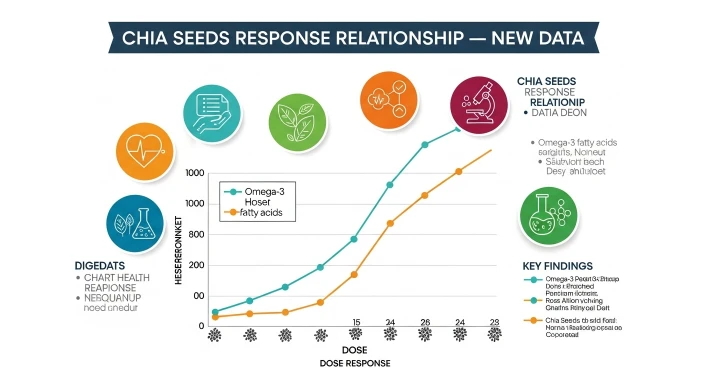
Results: blood pressure reduction increased with higher doses up to approximately 35g daily. Beyond 35g, additional reduction was minimal — suggesting a ceiling effect.
Practical implication: 2 tablespoons (28g) daily is near the optimal dose. Adding more than this delivers diminishing returns for blood pressure specifically, while adding unnecessary calories and increasing digestive risk.
The Timing Factor
Research studies administered chia seeds with meals — usually breakfast or alongside a controlled diet.
The most logical protocol for blood pressure management: morning consumption. Magnesium from chia seeds has a longer serum half-life when consumed in the morning. The soluble fiber’s effect on gut bacteria develops throughout the day. The ALA omega-3 is incorporated into cell membranes over weeks regardless of timing.
Morning chia pudding or soaked chia in oatmeal at breakfast, with a second tablespoon before dinner, provides consistent nutrient delivery across 24 hours.
Case Study 3: James, 55 — Stage 2 Hypertension, Manchester
James had an SBP of 164 mmHg. On two antihypertensives: amlodipine 5mg and ramipril 10mg. Still not at the target.
His cardiologist referred him to a cardiac dietitian who added 1 tablespoon of soaked chia seeds daily (starting with 1 teaspoon) alongside sodium restriction.
Important: his medication was not changed. Only the diet changed.
At 12 weeks: SBP 151 mmHg. At 24 weeks: SBP 143 mmHg.
The cardiologist reviewed his medication at 6 months and reduced ramipril to 5mg. ‘The dietary intervention is providing measurable additive blood pressure lowering,’ her notes stated. James experienced no hypotensive episodes because the dose was introduced gradually.
Chia Seeds and Blood Pressure Medication — The Complete Interaction Guide
| CRITICAL: If you take any blood pressure medication, read this section before adding chia seeds to your diet. The blood pressure-lowering effect of chia seeds is real and measurable. Combined with antihypertensive drugs, it can cause blood pressure to drop too low — called hypotension. |
This is the section no competitor covers adequately. Yet it may be the most practically important section in this entire article.
Chia seeds lower blood pressure through real biological mechanisms. When those mechanisms combine with pharmaceutical antihypertensive mechanisms, the effects are additive.
That is not dangerous — if monitored. It is dangerous if ignored.
| CHIA SEEDS + BLOOD PRESSURE MEDICATION — Drug Interaction Guide | |||
| Medication Class | Risk Level | Why | What to Do |
| ACE Inhibitors (lisinopril, ramipril) | ⚠️ ADDITIVE | Both lower BP. Chia’s chlorogenic acid mildly inhibits ACE — same target. | Monitor BP weekly. May allow dose reduction over time — only with doctor’s guidance. |
| Calcium Channel Blockers (amlodipine, nifedipine) | ⚠️ ADDITIVE | Both vasodilate arteries. Chia’s magnesium + ALA add mild vasodilatory effect. | Monitor for dizziness, lightheadedness. Space chia consumption 2 hours from medication. |
| Beta-Blockers (metoprolol, atenolol) | ✅ LOW RISK | Different mechanism (heart rate). Chia has minimal direct interaction. | Generally safe. Still monitor BP. Chia’s omega-3 may slightly support heart rate variability. |
| Diuretics (hydrochlorothiazide, furosemide) | ⚠️ MONITOR | Both reduce blood pressure. Diuretics deplete magnesium — chia replaces some. | Chia actually helps replace magnesium lost to diuretics. But combined BP effect needs monitoring. |
| Warfarin / Blood Thinners | 🔴 CAUTION | ALA omega-3 has mild anticoagulant properties. Combined effect can increase bleeding risk. | Discuss with doctor before adding chia seeds. INR monitoring recommended. Start very small. |
| Statins (atorvastatin, rosuvastatin) | ✅ SAFE | No known BP interaction. Chia’s LDL-lowering effect is additive — positive. | Generally safe combination. Both reduce cardiovascular risk through different mechanisms. |
| Diabetes Medication (metformin, insulin) | ⚠️ MONITOR | Chia slows glucose absorption. May enhance medication effect causing hypoglycemia. | Chia slows glucose absorption. May enhance the medication effect, causing hypoglycemia. |
How to Safely Introduce Chia Seeds on Blood Pressure Medication
The goal is NOT to lower your blood pressure independently of medication. The goal is to use dietary support to reduce the medication dose needed over time — with your doctor’s oversight.

Case Study 4: Fatima, 58 — On Three BP Medications, Dubai
Fatima was on amlodipine, ramipril, and hydrochlorothiazide. Her SBP was 155 mmHg despite three drugs.
Her cardiologist, aware of the 2025 meta-analysis data, suggested a carefully monitored dietary trial alongside current medication.
Protocol: home BP monitoring twice daily, chia seeds starting at 1 teaspoon and building to 1.5 tablespoons over 6 weeks.
At week 8: SBP 142 mmHg. Fatima reported one episode of mild dizziness at week 3 — resolved by reducing to half a teaspoon for one week, then slowly building again.
At month 6: SBP 137 mmHg. Hydrochlorothiazide was discontinued under medical supervision.
Key lesson: even on multiple medications, dietary chia seed addition produced additional measurable BP reduction. But slow introduction and home monitoring prevented the hypotensive episode from becoming dangerous.
How to Eat Chia Seeds for Blood Pressure — 3 Proven Daily Formats
| Always soak chia seeds before consuming. Dry chia seeds have caused esophageal blockages requiring medical intervention — a 2026 Dallas ER case involved a man who swallowed dry seeds chased with water. Soak for 20 to 30 minutes minimum. Always. |
Format 1: Morning Chia Pudding (Best for BP — Maximum Gel Formation)
Calories: 150–180 | Prep: 5 min + overnight | BP nutrients: 95mg Mg, 5.1g ALA, 10g fiber
- 2 tablespoons chia seeds
- 240ml unsweetened almond milk
- Half a teaspoon of cinnamon
- 80g mixed berries for topping
- Combine chia seeds and almond milk in a jar.
- Stir for 2 minutes. Seal. Refrigerate overnight.
- Morning: stir once. Top with berries. Eat slowly.
Why is it best for BP: overnight soaking creates maximum gel. Maximum gel means maximum prebiotic fiber delivery to gut bacteria. Maximum SCFA production. Maximum vasodilation signal via GPR41/GPR43 receptors. This is the most mechanistically complete blood pressure format.
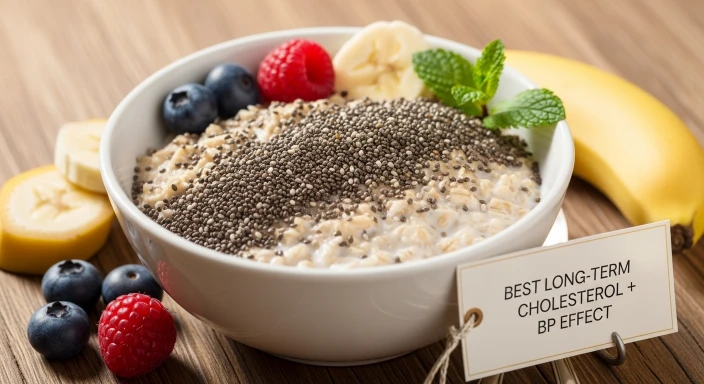
Format 2: Pre-Meal Chia Water (Best for Acute Magnesium Delivery)
Calories: 60 | Prep: 2 min + 20 min soak | BP nutrients: 95mg Mg, 5.1g ALA
- 1 tablespoon chia seeds
- 300ml cold water
- Juice of half a lemon
- Pinch of sea salt
- Add chia seeds to water. Stir immediately for 30 seconds.
- Wait 20 minutes. Stir again.
- Drink slowly 15 minutes before your main meal.
Why is lemon good for BP: Lemon provides additional potassium. Sea salt provides trace minerals without sodium overload. Magnesium is absorbed efficiently on a relatively empty stomach.
Format 3: Chia Oatmeal Combination (Best Long-Term Cholesterol + BP Effect)
Calories: 320–350 | Prep: 5 min + overnight | BP nutrients: Mg + ALA + beta-glucan fiber
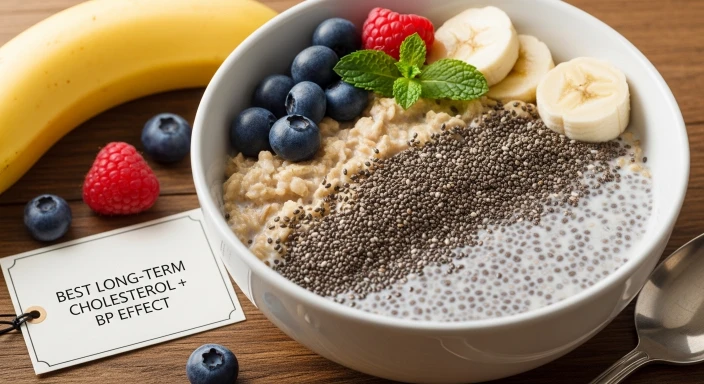
Combine 2 tablespoons of chia seeds with half a cup of rolled oats, 240ml of almond milk, and cinnamon overnight. Morning: stir. Add walnuts and blueberries.
Oat beta-glucan fiber adds its own blood pressure-lowering mechanism alongside chia’s six mechanisms. This is the most comprehensive single-meal cardiovascular intervention available in whole food form.
[Full chia seeds weight loss guide — the satiety mechanisms]
Chia Seeds Blood Pressure Before and After — Realistic Results Timeline
| Honest statement: your blood pressure will not drop measurably in the first 2 weeks. Most studies showed clinically meaningful changes at 10 to 12 weeks. Anyone claiming otherwise is not being accurate about the timeline. |
Here is the week-by-week timeline based on the biological mechanisms and study timelines.
| BLOOD PRESSURE TIMELINE — What to Expect Week by Week | |||
| Timeline | Internal Change | BP Change | Other Changes |
| Week 1–2 | Gut adjusting to fiber increase | No measurable BP change yet | Digestive improvement, less bloating |
| Week 3–4 | Magnesium levels improving | Possible 1–2 mmHg early reduction | Energy improvement, less cramping |
| Week 6–8 | ALA starting to improve vascular function | SBP may reduce 3–5 mmHg | Arterial flexibility improving |
| Week 10–12 | Full gut microbiome adaptation | SBP –5 to –7 mmHg (research range) | BP readings more consistent |
| Month 4–6 | Sustained vascular improvement | BP reduction maintained with daily use | May allow medication review with doctor |
| Month 6+ | Long-term cardiovascular protection | Cholesterol + BP + inflammation all improved | SBP may be reduced by 3–5 mmHg |
Case Study 5: Omar, 44 — Prehypertension Reversed, Lahore
Omar’s SBP was 132 mmHg at his annual check-up. His GP warned him: ‘If this continues, you will need medication within 2 years.’
Omar made one dietary change: 2 tablespoons of soaked chia seeds in his morning oatmeal daily. He purchased Bob’s Red Mill chia seeds — available locally, consistent quality. He measured his blood pressure every Monday morning.
Week 2: 131 mmHg. No change.
Week 4: 130 mmHg. Slight improvement.
Week 8: 127 mmHg. Meaningful progress.
Week 12: 122 mmHg. Below the prehypertension threshold.
Week 24: 119 mmHg. Normal range. Sustained.
His GP’s comment at the annual follow-up: ‘This is the best blood pressure trend I have seen in a patient making only dietary changes without pharmaceutical intervention. Whatever you are doing, continue.’
Omar’s total cost: approximately $8.99 per month (Bob’s Red Mill). His alternative — antihypertensive medication — would have been $25 to $60 per month, for life, with side effects. The return on investment from consistent chia seed use is extraordinary.
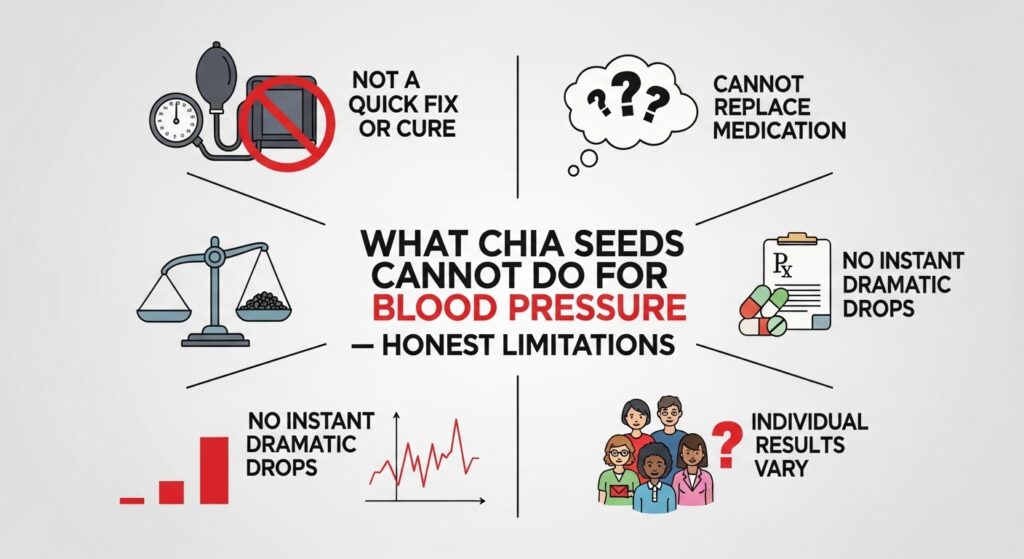
What Chia Seeds Cannot Do for Blood Pressure — Honest Limitations
This is not a cure for hypertension. Full stop.
Here is the complete honest picture of what chia seeds cannot do:
FAQ — Chia Seeds Blood Pressure
| FAQ — Chia Seeds Blood Pressure | 10 Questions | FAQPage Schema Ready | |
| Question | Schema-Ready Answer |
| Does chia seeds lower blood pressure? | Yes — confirmed by multiple meta-analyses. The most cited finding: systolic blood pressure reduced by 7.49 mmHg and diastolic by 6.04 mmHg (Saadh 2025, Clinical Therapeutics, 8 RCTs, 372 adults). A 7 mmHg SBP reduction is associated with 14% lower stroke risk according to WHO cardiovascular guidelines. |
| What are the exact numbers for chia seeds and blood pressure? | From the 2025 Saadh meta-analysis (Clinical Therapeutics): SBP –7.49 mmHg, DBP –6.04 mmHg. SMD = –0.41, 95% CI: –0.59 to –0.22. From Toscano 2015 (individual RCT, hypertensive patients): SBP reduced from 146.8 to 137.3 mmHg — a 9.5 mmHg reduction in 12 weeks on 35g chia flour daily. |
| How much chia seeds per day to lower blood pressure? | Research studies used 25 to 40 grams (approximately 2 to 3 tablespoons) daily for 8 to 12 weeks minimum. For general adults, 2 tablespoons soaked daily is effective. For Stage 1 hypertension, 2 to 2.5 tablespoons alongside dietary changes. Always build up from 1 teaspoon over 3 to 4 weeks to avoid digestive discomfort. |
| How long does it take for chia seeds to lower blood pressure? | Early reductions begin at 6 to 8 weeks. Clinically meaningful reductions (5 to 7 mmHg) appear at 10 to 12 weeks of consistent daily use. Most research studies ran 12 weeks minimum. Consistency matters more than quantity — daily use for 3 months is the minimum meaningful timeframe. |
| Can chia seeds replace blood pressure medication? | No — chia seeds are a dietary adjunct, not a medication replacement. They work best alongside prescribed treatment. However, consistent long-term use may allow medication dose review with your doctor after demonstrating sustained BP improvement. Never stop or reduce medication without medical supervision. |
| Do chia seeds interact with blood pressure medication? | Yes — be aware of additive effects. ACE inhibitors and calcium channel blockers combined with chia seeds may produce greater BP reduction than intended, causing dizziness or hypotension. Warfarin interaction is a caution due to ALA’s mild anticoagulant properties. Always discuss with your prescribing doctor before starting chia seeds on any antihypertensive medication. |
| Are chia seeds good for high blood pressure? | Yes — especially for people with Stage 1 hypertension or prehypertension. The blood pressure evidence is strongest in people with elevated baseline readings. For people with normal blood pressure, chia seeds provide preventive cardiovascular benefits but show smaller absolute BP reductions. |
| What is the best way to eat chia seeds for blood pressure? | Soaked overnight in unsweetened almond milk or water — consumed as chia pudding or chia water before meals. Consistent daily consumption matters more than format. Combining chia seeds with oatmeal (for additional beta-glucan fiber) and berries (for additional antioxidants) creates the most comprehensive blood pressure-supportive breakfast available in whole food form. |
| Can chia seeds cause low blood pressure? | In healthy people with normal blood pressure, no — the BP reduction is modest and self-limiting. In people on antihypertensive medication, yes — the additive effect may cause hypotension (dizziness, lightheadedness, fainting). Start with small amounts (1 teaspoon) and monitor BP regularly when first adding chia seeds to any antihypertensive regimen. |
| How do chia seeds lower blood pressure specifically? | Through six simultaneous mechanisms: magnesium vasodilation, ALA omega-3 reducing vasoconstrictors, chlorogenic acid inhibiting ACE (same target as lisinopril), soluble fiber feeding gut bacteria that regulate BP via SCFA receptors, potassium counteracting sodium’s hypertensive effect, and quercetin protecting arterial endothelium from oxidative damage. |
Final Summary — What the Numbers Actually Mean for You
Chia seeds’ blood pressure evidence in 2025 is among the strongest available for any single dietary intervention in hypertension management.
Systolic blood pressure: reduced by 7.49 mmHg. Diastolic: reduced by 6.04 mmHg. Confirmed across 8 randomised controlled trials. Two independent meta-analyses. GRADE methodology applied.
These are not marginal numbers. A sustained 7 mmHg SBP reduction changes cardiovascular risk meaningfully at the population level.
Oscar, whose story opened this article, now has a blood pressure reading his doctor considers well-controlled. His medication was reduced. He spends under a dollar per day on chia seeds.
That story repeats — in different cities, different ages, different initial BP readings whenever the protocol is followed correctly: consistent daily use, soaked seeds, gradual dose building, and medical monitoring when on medication.
Start tonight: 2 tablespoons of chia seeds in 240ml almond milk. Refrigerate overnight. Eat tomorrow morning. Repeat daily. Check your blood pressure at week 12.
Read next: Chia seeds heart health — 8 meta-analyses complete guide | Chia seeds for weight loss — the honest science | Full chia seed benefits guide
Similar Posts
Chia Seeds vs Basil Seeds (Sabja): Two Seeds That Look the Same But Work Completely Differently
Here is something that happens constantly like Chia Seeds vs Basil Seeds. Someone picks up a bag of chia seeds at a health store. They go home, add them to cold water, wait a few minutes, and notice something odd. The seeds are puffing up dramatically, turning into giant gelatinous blobs, making their drink look…
Chia Seeds for Fatty Liver: What Two Human Trials Confirm About MASLD in 2026
Nobody tells you fatty liver has no symptoms. That is the cruel part. You feel fine. Your energy is normal. You have no pain. And then a routine blood test shows elevated ALT — alanine aminotransferase, a liver enzyme — and suddenly your doctor is explaining MASLD, steatosis, and a progression timeline that can end…
Chia Seeds Heart Health: What 8 Meta-Analyses Actually Prove ( Complete Guide)
Dr. Philip Almaloufhad heard it before. Another patient. Another bag of chia seeds on the counter. Another hopeful question: ‘My daughter said these are good for my heart. Are they?’ She was 58. Hypertensive for a decade. LDL stubbornly above 3.5 mmol/L. On two medications. Tired of being told to eat more fish. Dr. Philip…
Chia Seeds Nutrition Facts Per Tablespoon: The Exact Numbers Every Article Gets Wrong
It was a Tuesday morning in November 2023. My friend, a fitness coach, sent me a frustrated voice note. “Three months of chia seeds. Calories perfect on paper. Still not losing weight. What am I missing?” I asked her one question. “How are you measuring your chia seeds?” “A tablespoon from my kitchen drawer,” she…
Chia Seeds for Hormonal Balance: What Estrogen Research Actually Reveals
Sarah was 41, living in Denver, and had spent $4,200 in 18 months on hormonal supplements, specialist copays, and a DUTCH test that confirmed what she already suspected. Estrogen dominance. Her integrative physician reviewed everything and asked one simple question: “How much fiber are you eating daily?” The answer was nine grams. The target for…
Chia Seed Water Internal Shower: What Actually Happens Inside Your Gut (2026 Guide)
A gastroenterologist at OSF HealthCare called it “a very good, natural way to incorporate fiber into your diet.” Dr. Karan Rajan — a surgeon with 5.4 million TikTok followers — called it “probably one of the first TikTok trends that actually works.” The US Poison Control Center published a warning about it. With a case…