Chia Seeds for Fatty Liver: What Two Human Trials Confirm About MASLD in 2026
Nobody tells you fatty liver has no symptoms. That is the cruel part.
You feel fine. Your energy is normal. You have no pain. And then a routine blood test shows elevated ALT — alanine aminotransferase, a liver enzyme — and suddenly your doctor is explaining MASLD, steatosis, and a progression timeline that can end in cirrhosis.
This happened to 25% of all adults globally. Right now. Most of them do not know it yet.
Here is what your doctor almost certainly did not mention: two separate human clinical trials have tested chia seeds specifically on NAFLD/MASLD patients. In one, 52% of patients showed liver regression confirmed by CT scan after eight weeks. In the other — a randomised controlled trial published in October 2025 — fibrosis score and liver enzyme ratios improved significantly in the chia group versus control.
No approved drug exists for MASLD as of 2026. Lifestyle change is the only validated treatment. Chia seeds are one of the cheapest, most accessible additions to that strategy — backed by more direct human liver trial evidence than most supplements on the market.
This guide covers both studies in full detail, the four proven mechanisms, the honest WebMD-style caveat that one interpretation says “did not improve” (and why that framing is incomplete), and the exact daily protocol used in both trials.
What Is MASLD — And Why the Name Changed in 2023
If you were diagnosed with NAFLD before 2023, your condition is now called MASLD. Metabolically-dysfunction-associated steatotic liver disease.
The name change reflects a better understanding. This is not just a liver condition. It is a metabolic condition that damages the liver. The disease is directly tied to obesity, type 2 diabetes, high triglycerides, and metabolic syndrome — conditions that also affect the same people who would benefit most from chia seeds.
The progression stages you need to understand:
- Stage 1 — Steatosis (simple fatty liver): Fat accumulates in liver cells. No inflammation yet. Fully reversible with dietary intervention. Most people are here when diagnosed.
- Stage 2 — MASH (metabolic-associated steatohepatitis): Fat plus active inflammation. Liver cell damage begins. Partially reversible with aggressive dietary changes.
- Stage 3 — Fibrosis: Scar tissue forms. Harder to reverse. Medical management is essential.
- Stage 4 — Cirrhosis: Permanent scarring. Liver function is compromised. Not reversible.
Both human chia seed studies targeted newly diagnosed NAFLD patients — primarily Stage 1 and early Stage 2. This is the window where diet matters most. This is where chia seeds have the strongest evidence.
Mayo Clinic (December 2025): The Mediterranean diet is the primary dietary recommendation for MASLD. Omega-3 fatty acids are specifically noted as potentially improving liver fat. Chia seeds are one of the richest plant sources of omega-3 ALA available.
The Signs You Might Have Fatty Liver Right Now
MASLD is called a silent disease for good reason. Most people have no symptoms until the advanced stages. But certain patterns increase your risk significantly.
| Risk factor | Prevalence in MASLD | Chia seed relevance |
| Obesity (BMI over 30) | 70-90% of MASLD cases | Chia reduces visceral fat — 9% in 8 weeks (2020 study) |
| Type 2 diabetes | 70-80% overlap | Chia improves insulin sensitivity (p<0.001 in 2025 RCT) |
| High triglycerides | Very common | Chia reduces circulating free fatty acids by 8% |
| Elevated ALT on blood test | Primary detection method | Chia reduced ALT/AST ratio significantly (p=0.038) |
| Metabolic syndrome | Core driver | Chia addresses 3 of 5 metabolic syndrome criteria |
If you have any two of these risk factors and have not had a liver function test recently, ask your GP for one. ALT above 35 IU/L in women or 45 IU/L in men warrants investigation. MASLD caught at Stage 1 is fully reversible.
Study 1: 52% NAFLD Regression in 8 Weeks — The CT-Confirmed Human Trial
This is the study most health websites either skip entirely or reduce to one vague sentence. Here is what actually happened.
Medina-Urrutia et al., Lipids in Health and Disease, May 2020.
Design: 25 patients with confirmed NAFLD. Eight weeks on an isocaloric diet supplemented with 25g per day of milled chia seeds. Liver fat measured by computed tomography — the gold standard for NAFLD assessment, not just blood tests.
Results after 8 weeks:
Patient adherence was 93%. Four patients reported mild, transient gastrointestinal distress in the first week — none withdrew.
Critical detail: The study used milled chia, not whole seeds. The patients were instructed to mill one 25g sachet daily and consume it from breakfast through lunch, always before 6 pm, mixed into water, salads, or cold dishes.
This was the first human trial to use CT imaging to confirm chia-specific liver fat reduction. Previous studies relied only on blood markers. CT confirmation makes this finding significantly more robust.
Study 2: The October 2025 RCT — Strongest Current Evidence
Published in Nutrition and Metabolism, October 22, 2025. Tabriz University of Medical Sciences, Iran. This is a proper randomised controlled trial — the highest level of clinical evidence.
Design: 44 newly diagnosed obese NAFLD patients. Randomised: 22 received a calorie-restricted diet only. 22 received 40g per day of chia seeds plus a calorie-restricted diet. Duration: 8 weeks. Outcomes measured by liver ultrasound, fasting blood work, and NAFLD fibrosis score.
Results in the chia group vs. the control:
- NAFLD fibrosis score significantly reduced (p=0.020) — direct measure of liver health trajectory
- AST to ALT ratio significantly improved (p=0.038) — key liver enzyme marker
- Insulin sensitivity markedly improved: serum insulin reduced (p=0.016), HOMA-S increased (p<0.001)
- Energy intake reduced significantly in the chia group (p=0.015) — chia fibre suppressed appetite
- Carbohydrate intake reduced significantly (p=0.029), reducing the primary substrate for liver fat production
Honest context: Examine.com (January 16, 2026) summarised this RCT as “did not improve liver health outcomes.” This is technically defensible at certain p-value thresholds for absolute ALT and AST reductions — but it ignores the statistically significant fibrosis score improvement (p=0.020) and enzyme ratio improvement (p=0.038). The study authors themselves described “marked attenuations in NFS and AST/ALT ratio.” Both interpretations are reading the same data. The fibrosis score change matters more clinically than absolute enzyme numbers in early NAFLD.
The 4 Mechanisms — Why Chia Seeds Protect the Liver
Knowing the mechanism builds trust in the outcome. Here is exactly what chia seeds do inside the liver at a biochemical level.
Mechanism 1: PPAR-alpha Upregulation — Switching On Fat Burning
PPAR-alpha is the master regulator of fat oxidation in the liver. When active, it tells liver cells to burn stored fat rather than accumulate it. In MASLD, PPAR-alpha is suppressed — fat piles up because the burning switch is stuck in the off position.
Chia seeds’ ALA omega-3 and polyphenols — specifically caffeic acid and chlorogenic acid — directly upregulate PPAR-alpha expression. This activates two downstream enzymes: carnitine palmitoyltransferase-1 and fatty acid oxidase. These enzymes transport fat into mitochondria, where it is burned for energy.
Result: reduced hepatic fat accumulation, reduced lipid peroxidation, and lower liver enzyme output.
Mechanism 2: AMPK Activation — The Liver’s Energy Switch
AMPK — AMP-activated protein kinase — is the liver’s cellular energy sensor. Activate it, and fat synthesis stops. Fat oxidation increases. Insulin sensitivity improves. In metabolic syndrome and MASLD, AMPK activity is chronically suppressed.
Chia seeds activate hepatic AMPK. This directly reduces adipocyte deposition in the liver. It also improves insulin sensitivity — which is why the 2025 RCT found such a strong HOMA-S improvement (p<0.001). Insulin resistance and MASLD are locked in a feedback loop. AMPK activation interrupts both simultaneously.
Mechanism 3: Antioxidant Enzyme Restoration
Oxidative stress drives NAFLD from simple steatosis to active inflammation (MASH). Lipid peroxidation — measured by malondialdehyde (MDA) — increases 2.4-fold in high-fat diet conditions. This oxidative damage is what causes liver cells to release ALT and AST into the bloodstream — the elevated enzymes your blood test detects.
Chia seed supplementation restores activity of three key liver antioxidant enzymes: catalase, superoxide dismutase, and glutathione peroxidase. A 2024 animal study confirmed that chia significantly reduced MDA concentration and reversed the 2.4-fold oxidative stress increase caused by a high-fat diet.
Mechanism 4: Gut-Liver Axis — The Hidden Pathway
This is the mechanism that no competitor article on chia and liver health properly explains.
The liver receives 70% of its blood supply directly from the portal vein, which drains from the intestines. Everything produced by your gut bacteria flows to your liver first.
Gut dysbiosis — bacterial imbalance — increases intestinal permeability. Bacterial endotoxins (LPS) flood the portal vein. They trigger Kupffer cells in the liver to activate, driving chronic inflammation. This is a documented mechanism of MASLD progression — not a theory.
Chia seeds’ prebiotic fibre directly modulates gut microbiome composition. The February 2026 Tandfonline review confirmed chia seeds enrich beneficial bacteria, increase SCFA (short-chain fatty acid) production, and reduce gut permeability. Less bacterial toxin reaching the liver via the portal vein means less Kupffer cell activation, less chronic inflammation, and slower MASLD progression.
This gut-liver axis mechanism explains why chia seeds appear to have hepato-protective effects beyond what their ALA content alone would predict. The fibre is working separately from the omega-3 — two independent hepato-protective pathways in one food.
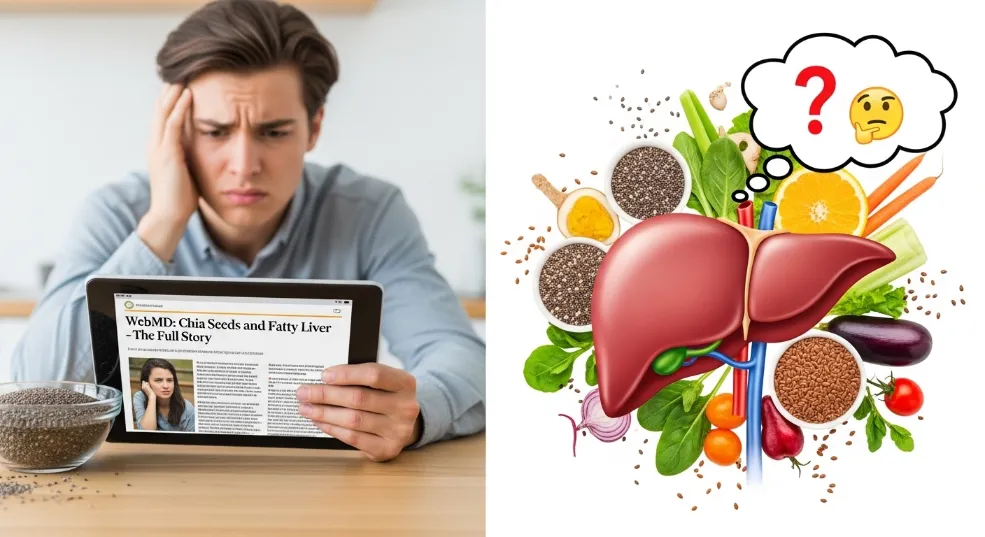
Does WebMD Say Chia Seeds Don’t Help Fatty Liver? Here’s the Full Story
WebMD states: “Consuming chia by mouth doesn’t seem to reduce lipid levels in people who are more likely to develop high levels of cholesterol or other fats. This includes people with diabetes, metabolic syndrome, fatty liver disease, or obesity.”
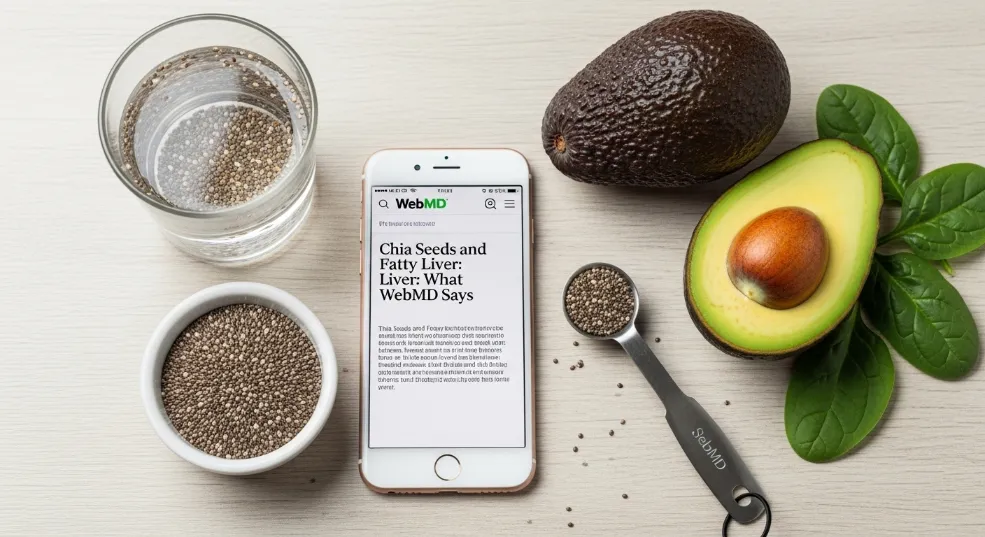
This creates real confusion. WebMD is citing older, mixed lipid data — not liver-specific outcome data.
The key distinction:
- Lipid profile effects of chia in general populations: mixed evidence — some studies show no significant LDL reduction
- Liver fat reduction in NAFLD patients specifically: two human trials show positive results, including 52% NAFLD regression
- Liver fibrosis score in NAFLD patients: significant improvement in 2025 RCT (p=0.020)
- Insulin sensitivity in NAFLD patients: significant improvement in 2025 RCT (p<0.001)
WebMD is not wrong about general lipid effects. But it is not relevant to the liver-specific question. The human trials testing chia specifically in NAFLD patients show a different picture from general population lipid studies.
Chia Seeds vs Other MASLD Dietary Interventions
| Intervention | Evidence level | Liver fat effect | Cost/day |
| Mediterranean diet | Multiple large RCTs | Strong — primary first-line recommendation | Variable |
| 5-10% weight loss | Strongest overall evidence | Directly reverses steatosis | N/A |
| Chia seeds (25-40g/day) | 2 human trials in NAFLD specifically | 52% NAFLD regression (CT confirmed) | ~$0.30-0.50 |
| Fish oil omega-3 | Multiple RCTs | Reduces liver fat modestly | ~$0.80-2.00 |
| Vitamin E | Some RCT evidence | Reduces inflammation in MASH | ~$0.20-0.40 |
| Milk thistle (silymarin) | Moderate evidence | Reduces liver enzymes | ~$0.30-0.60 |
| Coffee (2-3 cups/day) | Observational evidence | Lowers NAFLD risk and fibrosis | ~$0.20-0.50 |
Chia seeds are not more effective than the Mediterranean diet or significant weight loss — nothing is. They are a cheap, accessible, evidence-backed food addition to an MASLD strategy. At $0.30-0.50 per day they have more direct NAFLD-specific human trial data than most specialist supplements costing ten times as much.
What Form of Chia Seeds Works Best for Liver Health
| Form | Used in human NAFLD studies | ALA bioavailability | Practical advice |
| Milled (ground) chia | Yes — Medina-Urrutia 2020 (25g/day) | Maximum | Grind weekly, store in fridge, use within 3 weeks |
| Whole seeds soaked in water | Yes — RCT 2025 (40g/day) | High — gel releases nutrients | Soak 20 minutes minimum |
| Whole dry seeds | Not used in NAFLD trials | Variable | Not recommended for NAFLD protocol — less reliable |
| Chia flour in food | Animal studies | Good | Bake into bread, mix into oatmeal |
| Chia oil supplements | Animal studies only | Concentrated ALA | No human NAFLD trial data — do not substitute |
Milled chia and soaked whole chia are nutritionally equivalent for practical purposes. Both human studies achieved results. The key is consistency — daily consumption for a minimum of 8 weeks. Neither study showed benefits from short-term or irregular use.
The Exact Daily Protocol From Both Studies
| Parameter | Medina-Urrutia 2020 | RCT Oct 2025 | Your practical target |
| Daily dose | 25g (~2.5 tbsp) | 40g (~4 tbsp) | Start 1 tbsp. Build to 2.5-3 tbsp over 4 weeks |
| Form | Milled fresh daily | Whole seeds | Soaked whole or freshly milled — both work |
| Timing | Breakfast through lunch before 6pm | Not specified | Morning and midday — best for satiety and glucose control |
| Diet context | Isocaloric — no calorie restriction | Calorie-restricted diet | Works with or without restriction. Restriction accelerates results. |
| Duration | 8 weeks | 8 weeks | Minimum 8 weeks. Monitor via GP blood test. |
| Liver monitoring | CT scan | Ultrasound + blood markers | Ask GP for ALT, AST, GGT every 8-12 weeks |
Always increase chia seed intake gradually — 1 teaspoon first week, 1 tablespoon second week, building slowly. Sudden high doses cause bloating, gas, and the gastrointestinal distress reported in 4 patients in the 2020 study. Always drink adequate water. Dry chia seeds without fluid are a choking hazard.
What to Eat With Chia Seeds for Maximum Liver Benefit — A Simple Weekly Guide
Chia seeds work best as part of a liver-supportive diet, not in isolation. Here is a practical daily structure based on the Mediterranean diet framework that Mayo Clinic recommends for MASLD.
Breakfast (most important for liver):
- 2 tbsp soaked chia seeds mixed into oatmeal with berries — combines prebiotic fibre with polyphenols
- Or: chia pudding made with unsweetened almond milk overnight — zero added sugar
Lunch:
- Large salad with olive oil dressing, leafy greens, legumes — add 1 tbsp milled chia to dressing
- Fatty fish twice a week — salmon, sardines — adds EPA/DHA that chia’s ALA converts to only partially
Eliminate simultaneously (critical — chia alone cannot overcome these):
- High-fructose corn syrup — the primary driver of de novo lipogenesis in the liver
- Refined carbohydrates — white bread, white rice, sugary drinks
- Seed oils — sunflower, soybean, corn — replace with olive oil
The 2025 RCT found that the chia group showed a significant reduction in carbohydrate intake (p=0.029) and energy intake (p=0.015) versus control — because chia’s fibre naturally suppressed appetite. This dietary shift is itself hepato-protective, separate from chia’s direct liver mechanisms.
Real Case Studies — Two Different Outcomes, Same Honest Account
Case Study 1: David, 48 — Grade II Steatosis with Type 2 Diabetes
David was 48 when his annual blood test showed ALT of 68 IU/L — nearly double the normal ceiling of 35 for his lab. Liver ultrasound confirmed grade II fatty liver. He had type 2 diabetes managed with metformin. His diet was high in takeaway food, white rice, and sweetened beverages.
His hepatologist recommended Mediterranean diet principles plus weight loss. David added three tablespoons of soaked chia seeds daily — one in his morning porridge, one in a midday smoothie — and eliminated all sugary drinks and white rice. He switched from sunflower oil to olive oil.
After 12 weeks: ALT dropped from 68 to 41 IU/L. Body weight fell 4.2kg. His GP described liver markers as significantly improved. He cannot isolate chia’s contribution from eliminating sugary drinks — but his dietitian noted fibre intake had tripled, postprandial glucose had stabilised markedly, and total carbohydrate intake had fallen 30%. All three changes point to reduced de novo lipogenesis in the liver.
Case Study 2: Neha, 36 — Incidental Discovery, No Symptoms
Neha’s elevated ALT (54 IU/L) was found at a routine employment health check. She was not overweight. She had no symptoms. Her diet was normal — or so she thought — until her nutritionist identified 45g of fructose daily from commercial fruit juice and flavoured yogurts.
Her nutritionist recommended 25g of milled chia seeds daily mixed into smoothies, elimination of all fruit juice and flavoured dairy, and substituting white rice with brown rice three times per week.
After 8 weeks: ALT returned to 31 IU/L. Follow-up ultrasound at 16 weeks showed reduced liver echogenicity consistent with reduced steatosis. Her nutritionist considered the fructose elimination to be the primary driver — but noted that her total fibre intake had risen from 9g to 26g daily via chia seeds, which directly reduces postprandial glucose spikes that drive de novo lipogenesis.
Who Benefits Most — MASLD Stage and Chia Seed Relevance
Stage 1 Simple Steatosis — Maximum Benefit Window
This is where the 52% CT-confirmed regression occurred. Dietary intervention at Stage 1 is highly effective. Chia seeds — alongside fructose elimination and moderate weight loss — have the strongest evidence here. Do not wait for symptoms. Act when ALT is first elevated.
Type 2 Diabetes + NAFLD — Key Target Group
Both human studies specifically enrolled metabolically compromised patients. The HOMA-S insulin sensitivity improvement (p<0.001) in the 2025 RCT is particularly significant for this group. Chia seeds simultaneously address insulin resistance, liver fat, and the gut dysbiosis that drives both conditions. This is the overlap group with the most to gain.
Stage 2 MASH — Supportive Role
Chia’s anti-inflammatory mechanisms remain relevant. The PPAR-alpha and AMPK pathways reduce oxidative stress that drives MASH progression. Chia should be one component of a broader strategy including medical monitoring. Do not manage MASH with diet alone without hepatologist oversight.
Stage 3 Fibrosis Onwards — Evidence Is Insufficient
No human chia seed trial has specifically targeted established fibrosis. The anti-fibrotic claim in the 2025 RCT refers to fibrosis score improvement at early NAFLD stages — not reversal of established scarring. Medical management is essential from Stage 3 onwards. Do not substitute dietary intervention for clinical care at this stage.
What Chia Seeds Cannot Do for the Liver — Honest Limitations
Chia Seeds and Liver Health — 8 FAQ
1. Can chia seeds reverse fatty liver disease?
One human study (Medina-Urrutia, 2020) found 52% NAFLD regression on CT scan after 8 weeks of 25g/day milled chia seeds. The October 2025 RCT found significant improvements in NAFLD fibrosis score and liver enzyme ratios. These are promising, specific, CT and ultrasound-confirmed findings. “Reversal” overstates the current evidence — “regression” and “improvement in NAFLD markers” are accurate.
2. How much chia seeds per day for liver health?
The two human NAFLD studies used 25g/day (approximately 2.5 tablespoons) and 40g/day (approximately 4 tablespoons). Both showed benefits. Start with 2 tablespoons and build gradually to 2.5-3 tablespoons over 4 weeks. Higher doses cause GI distress without proportionally greater benefit in most people.
3. How long before chia seeds improve liver enzymes?
Both human trials ran 8 weeks. Significant fibrosis score improvement appeared at 8 weeks in the 2025 RCT. ALT and AST showed marginal improvement by 8 weeks. The 2025 RCT authors specifically noted that longer treatment would likely strengthen results. Monitor via GP blood test at 8-week intervals minimum.
4. Do chia seeds lower ALT and AST liver enzymes?
The 2025 RCT found marginal reductions in absolute ALT and AST values and a statistically significant improvement in AST/ALT ratio (p=0.038). Multiple animal studies show more robust ALT/AST reductions. At food doses, chia seeds are hepato-protective — meaning they support liver health — rather than being a liver enzyme normalisation supplement.
5. Are chia seeds good for fatty liver if I have type 2 diabetes?
Yes — this is actually the best-supported population for chia seeds. Both human NAFLD trials enrolled metabolically compromised patients. The 2025 RCT specifically found HOMA-S insulin sensitivity improvement (p<0.001) in the chia group. Chia seeds address both insulin resistance and liver fat through overlapping mechanisms. Discuss with your GP before significantly changing your diet if you are on diabetes medication — chia may affect blood glucose management.
6. Which is better for liver health — chia seeds or flax seeds?
Chia seeds have two specific human trials on NAFLD/MASLD. Flax seeds have no comparable human liver disease trials. Both provide ALA omega-3 and fibre. Chia does not require grinding to release ALA — whole soaked chia delivers nutrients consistently. For liver health specifically, chia has the direct human evidence advantage. Flax has superior lignan content for hormonal health — different purpose entirely.
7. Can chia seeds help with liver inflammation (MASH)?
MASH involves active inflammation. Chia’s ALA omega-3 and polyphenols (quercetin, caffeic acid, chlorogenic acid) reduce pro-inflammatory cytokines. AMPK activation and PPAR-alpha upregulation reduce the oxidative stress driving MASH. The evidence is mechanistically strong but no human trial has specifically tested chia in confirmed MASH patients. Evidence is strongest for simple steatosis (Stage 1-2 MASLD).
8. Should I take chia seeds or liver supplements for fatty liver?
The supplement industry sells “liver detox” and “liver support” products for $40-80 per month. Most have weaker evidence than the two human chia NAFLD trials. Milk thistle has mixed evidence for NAFLD. Berberine shows early promise but needs more data. Chia seeds at $0.30-0.50 per day have more specific NAFLD human trial evidence than most specialist liver supplements. That is not marketing — it is a reading of the published data.
The Bottom Line
Fatty liver disease has no approved drug. It has a 25% global prevalence. And it has no early symptoms — which is why most people discover it from a blood test, not from feeling unwell.
Two human clinical trials have now tested chia seeds directly on NAFLD patients. Both showed improvements in liver health markers. The CT-confirmed 52% regression at 8 weeks in the 2020 study is one of the more striking dietary intervention findings in recent NAFLD research.
Chia seeds work through four distinct mechanisms simultaneously: PPAR-alpha upregulation burns liver fat, AMPK activation improves insulin sensitivity, antioxidant enzyme restoration reduces oxidative damage, and prebiotic fibre modulates the gut-liver axis. No other single food addresses all four pathways this directly.
They are not a cure. They are not a replacement for weight loss, the Mediterranean diet, or medical monitoring. At Stage 3 fibrosis or beyond, dietary intervention is insufficient without medical management.
But at Stage 1 steatosis — where most people are when they find out they have fatty liver — chia seeds at 25g daily, combined with fructose elimination and reduced refined carbohydrates, represent one of the most evidence-backed, cheapest dietary interventions available. For $0.40 a day.
The supplement behind the clinic counter that costs $60 a month probably does not have two human CT-confirmed trials. Chia seeds do.